

i'm off to golf in a few minutes, so this will be a short one. (maybe more this afternoon)
i just climbed out of bed into a cold winters morning i get that the physical discomfort of this seems trivial compared to what you describe, but there are correlations.
Does the looking forward to golf make it easier to bear or is it the inevitablity of the commitment?
i'm dressed now so warming up is happening.
i noticed that reference to the discomfort of cold happened in passing as preparation activities progressed.
i guess for you the discomfort that arrives at the idea of the time/effort that your chores require is dominant??
This tends to overshadow everything.
Can you find a place in there where the idea of enjoying your misery can exist (even for a moment)?
create a narrative about your response to these words and also to the attempt to do what they offer...
(i'll think of you while i hit that little ball)
much love
vince
realizing selflessness
-
vinceschubert

- Posts: 5745
- Joined: Fri Nov 04, 2011 11:02 am
- Location: Australia
- Contact:

Re: realizing selflessness
Hi, vince. Thanks for your note.
The editing projects I’ve been doing lately are all on international tax law. (I do find it entertaining to tell people that because I always get sympathetic groans about how ridiculously boring that sounds, and is.)
I was going to say that I hate grading papers, but that’s too much of a generalization. The batch I’m working on today and need to aim to finish tomorrow are reflections by the students in my Zen class about trying “counting the breath.” These reflections are short and relatively interesting, and the students mostly do just fine on them, and I find it much easier and more pleasant to grade and comment on good work than bad work. And over the years, I’ve gotten better at heading off the assumption that you’re aiming to have as few thoughts as possible in zazen. So I don’t have to write so many comments about that.
The next batch of papers are creative renditions of parts of the traditional story of the Buddha. These are longer, and I have to write more comments, and these days, I have to think about what to do if it looks like a student had ChatGPT write it for them. I really hate that!!! But the students sometimes delight me with their creativity.
Went back to your question and remembered that you’d asked about enjoying my misery, not about seeing how maybe it’s not so miserable as I’d thought. Enjoying the misery of my work . . . Like happily hating the miserable weather . . .
Nope, I’m not quite getting there.
I do sometimes commiserate by text with the same friend from the snow story about our executive functioning difficulties. I suppose I could text a vociferous complaint to her. Actually, I more or less did that this morning but perhaps without enough exclamation points and jovial curse words.
That’s all I’ve got at the moment. Thoughts?
Yes, I suppose so.i guess for you the discomfort that arrives at the idea of the time/effort that your chores require is dominant??
This tends to overshadow everything.
That idea is not completely alien to me. The example that comes to mind is one I’ve used in explaining Zen practice, and it has to do with being cold. A friend and I, both from Southern California, were living in Colorado and were walking home from the market on a really cold, snowy day and were hating it. We wondered what the “Zen” attitude would be and initially thought it was to be okay with the cold but then realized, no, it was to be okay with hating the cold. So we happily and vociferously hated the weather the rest of the way home.Can you find a place in there where the idea of enjoying your misery can exist (even for a moment)?
Alright, so, I hate having too much work to do. I hate having more than one big thing to focus on at the same time.create a narrative about your response to these words and also to the attempt to do what they offer...
The editing projects I’ve been doing lately are all on international tax law. (I do find it entertaining to tell people that because I always get sympathetic groans about how ridiculously boring that sounds, and is.)
I was going to say that I hate grading papers, but that’s too much of a generalization. The batch I’m working on today and need to aim to finish tomorrow are reflections by the students in my Zen class about trying “counting the breath.” These reflections are short and relatively interesting, and the students mostly do just fine on them, and I find it much easier and more pleasant to grade and comment on good work than bad work. And over the years, I’ve gotten better at heading off the assumption that you’re aiming to have as few thoughts as possible in zazen. So I don’t have to write so many comments about that.
The next batch of papers are creative renditions of parts of the traditional story of the Buddha. These are longer, and I have to write more comments, and these days, I have to think about what to do if it looks like a student had ChatGPT write it for them. I really hate that!!! But the students sometimes delight me with their creativity.
Went back to your question and remembered that you’d asked about enjoying my misery, not about seeing how maybe it’s not so miserable as I’d thought. Enjoying the misery of my work . . . Like happily hating the miserable weather . . .
Nope, I’m not quite getting there.
I do sometimes commiserate by text with the same friend from the snow story about our executive functioning difficulties. I suppose I could text a vociferous complaint to her. Actually, I more or less did that this morning but perhaps without enough exclamation points and jovial curse words.
That’s all I’ve got at the moment. Thoughts?
Thanks, vince.(i'll think of you while i hit that little ball)
Re: realizing selflessness
Was scrolling up through our recent posts and realized that it didn’t even occur to me this morning to see the spinning thoughts as a story.
And it didn’t occur to me to take a snapshot of the experiences of a single instant, and then the next one, and then the next one—to see if my hypothesis was correct that stories only exist in time.
Maybe those things could’ve helped.
Or maybe the brain would’ve just said, “Screw you!” But maybe not.
Brain probably would’ve flipped off any suggestions about nothing being missing or seeing the unhappiness as part of the completeness or seeing that “This is it.” (Interesting how some of these pointers need the right context.)
And it didn’t occur to me to take a snapshot of the experiences of a single instant, and then the next one, and then the next one—to see if my hypothesis was correct that stories only exist in time.
Maybe those things could’ve helped.
Or maybe the brain would’ve just said, “Screw you!” But maybe not.
Brain probably would’ve flipped off any suggestions about nothing being missing or seeing the unhappiness as part of the completeness or seeing that “This is it.” (Interesting how some of these pointers need the right context.)
Re: realizing selflessness
Hi, vince. Today's musings:
A problem I’ve had ever since I got into Zen practice is that I sometimes try to deal with issues “spiritually” that would more appropriately be dealt with in more ordinary ways. E.g., many years ago, it took me an awfully long time to realize that I didn’t just need to keep noticing and letting go of thoughts about how much I hated my job; I needed to get a new job!
After I’d done more work today than I really have the stamina for these days, spouse said he didn’t want me getting burnt out again and that we’re doing okay financially, so maybe I need to turn down some editing work. This would be in one little area where I’ve made myself indispensable to my boss, though I know there’s someone else who could step up. My boss might be disappointed, and I might lose this particular income opportunity. But, yeah, I shouldn’t keep doing this to myself.
Then I realized that being overcome by oppression yesterday morning was probably a realistic emotional response to what I knew I had to do this week, which is more than I can reasonably handle. So no wonder I felt like my brain would’ve flipped off any reminders that “This is it” or what have you. I think K's brain was going to keep throwing a tantrum until someone took notice and took care of K.
I was pleased with the phrase “jovial curse words” that my brain generated for a recent post, and I kept rolling it around in my mind. I think it nicely points to enjoying one’s misery. And now that K knows her issue is going to be addressed, perhaps she’ll be a little more willing and able to try enjoying this short spurt of misery.
A problem I’ve had ever since I got into Zen practice is that I sometimes try to deal with issues “spiritually” that would more appropriately be dealt with in more ordinary ways. E.g., many years ago, it took me an awfully long time to realize that I didn’t just need to keep noticing and letting go of thoughts about how much I hated my job; I needed to get a new job!
After I’d done more work today than I really have the stamina for these days, spouse said he didn’t want me getting burnt out again and that we’re doing okay financially, so maybe I need to turn down some editing work. This would be in one little area where I’ve made myself indispensable to my boss, though I know there’s someone else who could step up. My boss might be disappointed, and I might lose this particular income opportunity. But, yeah, I shouldn’t keep doing this to myself.
Then I realized that being overcome by oppression yesterday morning was probably a realistic emotional response to what I knew I had to do this week, which is more than I can reasonably handle. So no wonder I felt like my brain would’ve flipped off any reminders that “This is it” or what have you. I think K's brain was going to keep throwing a tantrum until someone took notice and took care of K.
I was pleased with the phrase “jovial curse words” that my brain generated for a recent post, and I kept rolling it around in my mind. I think it nicely points to enjoying one’s misery. And now that K knows her issue is going to be addressed, perhaps she’ll be a little more willing and able to try enjoying this short spurt of misery.
-
vinceschubert
- Posts: 5745
- Joined: Fri Nov 04, 2011 11:02 am
- Location: Australia
- Contact:
Re: realizing selflessness
Hi K,
A response here is that this is brilliant!
In over 14 years since 'that shift', i has never occurred to me (or anyone else) how the illusion of time features so much in thought stories.
Here's what you triggered; (to be published towards the end of this month)
story: The Clockmaker’s Story
Song: Stories Need Time https://soundcloud.com/vince-schubert-1 ... -need-time
Daniel was angry because the clock had stopped.
It was an old clock that sat on Clara’s mantelpiece, too grand for the small room and too unreliable to be useful. It had a brass face, dark wooden sides, and a pendulum that swung with great seriousness whenever it remembered its job.
That morning, it had stopped at 7:12.
Daniel noticed it just after breakfast.
“Your clock’s stopped again,” he said.
Clara looked up from her tea. “It does that.”
“It’s meant to tell time.”
“It tells time occasionally.”
“That’s not how clocks work.”
“It’s how this one works.”
Daniel stared at it as if personally betrayed.
Elias was sitting near the window, polishing his glasses with a cloth that had clearly given up long ago. Naomi was curled in the armchair, watching rain gather on the glass.
Daniel walked to the mantelpiece and tapped the clock.
Nothing happened.
He opened the little front door and nudged the pendulum.
It swung once, twice, then stopped again.
“Broken,” he said.
Elias looked over. “That’s a story.”
Daniel turned. “No, it’s a clock. It’s broken.”
“Perhaps. But listen to how quickly the story arrived.”
Daniel folded his arms.
Elias said, “What happened?”
“The clock stopped.”
“Good. That’s close.”
“At 7:12.”
“Yes.”
“And it shouldn’t have.”
“There’s the story.”
Daniel sighed.
He had not come to Clara’s house to have an inquiry with a clock.
But Elias had that look now, the look that meant some harmless object had been drafted into the service of discovery.
Elias said, “The event is simple. The hands are still. The pendulum is not moving. The thought says, ‘broken.’ Then another thought says, ‘it should be working.’ Then another says, ‘someone ought to fix it.’”
“It’s a clock,” Daniel said. “That is literally what clocks are for.”
“Yes. In practical life, fixing may happen. But notice the time-story.”
Daniel looked at the clock.
The time-story?
The clock had stopped. That was obvious.
Then the mind had added: It was working before. It is not working now. It should work later. This means it is broken. Someone should restore it to what it was.
Elias said, “Stories need time. The stopped clock does not suffer from time. You do.”
Naomi smiled.
Daniel did not.
He looked again.
The clock showed 7:12.
But it was not 7:12.
Or rather, the clock was not saying anything. It was simply arranged in a certain way: long hand here, short hand there, pendulum still, brass face catching a little morning light.
The story came from thought.
It used time to build a problem.
Before: working clock. Now: stopped clock. Future: clock needing repair.
A tiny mechanical timeline.
Clara said, “It’s quite beautiful when it stops.”
Daniel turned toward her. “That’s not the point.”
“It might be.”
The clock sat there, apparently untroubled by its failure.
Rain tapped the window.
A car passed outside, hissing along the wet street.
The room was warm.
Daniel felt the irritation in the chest. It had the same shape as many other irritations: tight, forward-leaning, righteous.
Then another story began:
Why am I irritated by a clock? I should be past this. This is ridiculous.
Elias saw his face change.
“There,” he said. “Another clock.”
Daniel blinked. “What?”
“The story about the clock stopped. Then the story about Daniel being irritated started.”
Daniel almost laughed.
The first story needed time: The clock used to work, now it does not, later it should.
The second story also needed time: I used to be more caught, now I should be freer, later I ought to be beyond this.
Same structure.
Different furniture.
Daniel sat down.
He could feel the mind becoming interested despite itself.
“So every story needs time?”
“Yes,” Elias said. “At least a little. A before, an after, and a meaning connecting them.”
“What about a simple story?”
“Give me one.”
Daniel thought. “The dog barked.”
“That’s barely a story. More like a report. But even there, barked implies a completed event. A tiny past.”
“The dog is barking.”
“That’s closer to present description. Still language, still a carve-out, but less story.”
“The dog.”
“Label.”
“Sound.”
“Closer.”
Daniel listened.
There was no dog, but there was rain, and the clock not ticking.
No ticking.
That absence seemed loud now.
Funny how silence could become an event when something expected was missing.
The mind said: The clock should be ticking.
Then: This silence means the clock is broken.
Then: We are talking about time because the clock stopped.
Then: This is all very clever.
Then: Am I getting it?
Elias laughed.
“You’re smiling.”
Daniel shook his head. “The mind is turning the inquiry into a story about understanding stories.”
“Of course.”
“Does it ever stop?”
“Storytelling?”
“Yes.”
“No. But being hypnotized by every story can soften.”
Clara placed her tea on the table.
“That’s a relief. I like stories.”
“So do I,” Elias said. “Stories are not the enemy. We just forget they are made of time.”
Naomi spoke quietly.
“It’s like when sadness comes, and instantly there’s a whole history.”
Everyone turned toward her.
She continued. “The sadness itself is just here. Heavy, warm, maybe in the chest or throat. But then the mind says, ‘This is because of what happened. This always happens. This means I’m still wounded. This will never leave.’ And suddenly sadness has a past and future.”
Elias nodded. “Exactly.”
Daniel felt that.
A sensation appears.
Then time wraps around it.
Before: This came from childhood. This came from that relationship. This came from old conditioning.
Future: This must be healed. This may never end. This means I am not free yet.
Present: I am the one who has this.
A whole self formed around sensation using time as glue.
Clara looked at the clock.
“So without time, the self-story can’t hold?”
“Not in the usual way,” Elias said. “The self is mostly a continuity story. Memory behind, projection ahead, and ownership in the middle.”
Daniel felt a small shiver.
Memory behind. Projection ahead. Ownership in the middle.
That was uncomfortably precise.
He thought of the phrase he often used without noticing:
I am still like this.
Still was time.
Like this was identity.
A whole world in four words.
I am still anxious. I am still seeking. I am still not free. I am still separate. I am still getting lost.
Still held the past in one hand and the future in the other.
Without still, what was here?
Sensation. Thought. Mood. Breath. Room. Rain. Clock.
Not a person trapped through time.
Just experience appearing.
Daniel stood and walked back to the mantelpiece.
The clock remained stopped.
He put his ear near it.
No tick.
He opened the door again and touched the pendulum, but this time did not try to make it work.
He simply felt the brass disc under his finger.
Cool. Smooth. Slightly dusty.
The thought said: This clock belonged to someone once.
Story.
Then: Maybe Clara inherited it.
Story.
Then: One day it may be thrown away.
Story.
Then: Everything ends.
Story.
Beautiful story, perhaps. Sad story, perhaps. But still story.
The brass was cool now.
That was not story.
Or at least it was closer.
Coolness. Finger. Contact. Seeing. Rain.
Elias said, “What is the clock without its story?”
Daniel did not answer immediately.
The mind wanted to say: wood, brass, mechanism, object, heirloom, broken clock.
All labels. All useful. All partial.
He looked.
The clock was shape, colour, stillness, reflection, memory, thought, expectation, sensation. And even that was too much.
“It’s this,” Daniel said.
Elias smiled.
“That word again.”
“It keeps being the only honest one.”
Clara stood and came beside Daniel.
“You know, my grandmother gave me that clock.”
Daniel laughed. “You just ruined it with a story.”
“No,” Clara said. “I gave it a story. That doesn’t ruin it.”
Elias nodded. “Good distinction.”
Clara ran her hand along the top of the clock.
“She kept it in her hallway. It used to tick so loudly I could hear it from the guest room when I stayed there as a child. I hated it then. After she died, I wanted it.”
The room softened.
Now the clock was not only brass and wood. It was grandmother, hallway, childhood, sleeplessness, death, inheritance, affection.
Story had entered.
But not as prison.
As tenderness.
Daniel saw it then.
The point was not to strip life bare and refuse story.
That would be another story, probably a very dry one.
The point was to know story as story.
To let it enrich without imprisoning. To let memory flower without becoming identity. To let future planning happen without turning the present into lack. To let time serve life rather than create the sufferer.
Clara closed the little door on the clock.
“It stopped the day before she died,” she said.
Daniel looked at her.
“Really?”
“No,” Clara said. “But it would have been a good story.”
Naomi burst out laughing.
Even Elias laughed.
Daniel groaned.
“You’re impossible.”
Clara shrugged. “Stories are fun.”
The laughter moved through the room.
For a moment, no one needed the clock to work.
No one needed the story to be true.
The stopped hands still pointed to 7:12.
The rain continued.
The body breathed.
The clock existed as thing, memory, joke, object, problem, beauty, and this strange lesson about time.
Then, without warning, the pendulum moved.
Once.
Twice.
A soft tick entered the room.
Daniel stared.
“You fixed it,” Naomi said.
“I didn’t.”
The clock ticked again.
Clara whispered, “Very theatrical.”
Elias looked delighted.
Daniel laughed.
Immediately the mind began:
The clock stopped, then the inquiry happened, then it started again at exactly the right moment. This must mean—
“No,” Daniel said aloud.
Everyone looked at him.
He grinned.
“Not today.”
The story waited at the edge of the room, disappointed but patient.
It would return.
Of course it would.
Stories love time, and time was what clocks offered.
But for now, there was only ticking.
Tick. Tick. Tick.
Not a story yet.
Just sound appearing.
And then, because everyone was human, Clara said, “Tea?”
“Yes,” Daniel said.
And that became the next story.
investigation: Stories only exist in time. More precisely: story requires time.
A story needs at least three elements:
1. Before
2. After
3. Meaning connecting them
Without time, there is no story. There is only this immediate happening.
A story says:
“Because that happened, this is happening.” “This means something about me.” “This will lead somewhere.” “I was like that, now I am like this.” “I am not there yet.” “One day I will be free.” “That person hurt me.” “I failed.” “I am progressing.” “I lost it.” “I found it.”
Every one of those depends on time.
No time, no storyline.
The structure of story
A story is not just words. It is a sequence.
It says:
Something happened before. Something is happening now. Something may happen later.
Then it adds meaning.
For example:
Event: A sensation appears in the chest.
Story:
“This anxiety is back again.” “It started because of what happened years ago.” “It means I’m still not free.” “I need to work through it so I can be okay later.”
See the time structure?
Past: it came from something. Present: it means something about me now. Future: it must be solved.
That is story.
But in direct experiencing:
Tightness. Pressure. Heat. Thought. Breath. Sensation.
No past is inside the tightness. No future is inside the pressure. No “me over time” is inside the heat.
The time appears as thought.
Identity is also a time-story
A “me” needs time.
Without memory and projection, what is the me?
The me is built from:
what happened to me, what I became, what I am like, what I need, what I lack, where I am going, what I hope will happen, what I fear will happen.
That is a timeline.
So the self-story is not merely located in time.
It is made of time.
“I am this kind of person” means:
I was like this before, I am still like this now, I will probably be like this later.
That continuity is story.
Useful? Yes, practically.
Ultimately solid? No.
Suffering usually needs time
Pain can appear now.
But psychological suffering usually needs time.
Pain:
“Tightness in the chest.”
Suffering:
“Why is this still here?” “This always happens.” “I’ll never be free.” “I thought I was past this.” “What if this never changes?”
All of those require time.
“Still” is time. “Always” is time. “Never” is time. “Past this” is time. “Will this change?” is time.
So a lot of suffering is not in the sensation itself.
It is in the time-story wrapped around the sensation.
Awakening stories also need time
This is where it gets subtle.
Even spiritual stories require time:
“I woke up.” “I’m not awake yet.” “I had a shift.” “I lost the clarity.” “I’m stabilising.” “I’m progressing.” “I’m nearly there.” “I was more identified yesterday.” “I will eventually get it.”
These may be useful conversationally.
But they are still time-stories.
They create a spiritual timeline.
Before awakening. After awakening. Progress. Regression. Arrival. Failure.
Again, not wrong in ordinary speech.
But worth seeing clearly.
The mind can turn even “no self” into a time-based project:
“I haven’t fully realised no-self yet.”
There it is again.
A me in time, moving toward a future state.
The present has no storyline
This immediate happening has no plot by itself.
Sound does not say where it came from. Sensation does not say what it means. Colour does not say what will happen next. Breath does not say whether progress is being made.
Thought supplies that.
Language supplies that.
Memory supplies that.
Prediction supplies that.
Without those, there is just:
seeing, hearing, sensing, thinking, breathing, moving, appearing.
Even thought appears now.
A thought about yesterday appears now. A thought about tomorrow appears now. A thought about awakening appears now. A thought about being lost in story appears now.
The content of thought may refer to time.
But the appearing of thought is now.
That distinction is gold.
The story is not the enemy
This does not mean stories are bad.
Human life uses stories.
You need story to remember appointments, maintain relationships, learn skills, write books, care for children, pay bills, understand consequences, and tell someone what happened yesterday.
Story is practical.
The suffering comes when story is mistaken for reality itself.
The cleaner view is:
Story is a useful carve-out in time.
It is not the whole of what is.
Inquiry
When a strong story appears, ask:
“What time does this story require?”
Does it need a past? Does it need a future? Does it need a continuing me? Does it need comparison? Does it need the word “still,” “again,” “always,” or “never”?
Then look at what is here before the timeline forms.
Not as a trick to destroy story.
Just to see the difference between:
experience now
and
story stretched through time
Clean formulation
Stories only exist in time because a story requires sequence, memory, projection, and meaning across before-and-after. The immediate present has no storyline by itself. Sensation, sound, colour, breath, and thought simply appear. The mind turns appearances into story by linking them to past and future. This is useful for practical life, but suffering begins when the time-story is mistaken for what is actually happening now.
Great appreciation
vince
..but now you do. Did you laugh?it didn’t even occur to me this morning to see the spinning thoughts as a story.
i believe that is accurate. Hmm, and slightly different - that time is a necessary component of all stories.stories only exist in time.
A response here is that this is brilliant!
In over 14 years since 'that shift', i has never occurred to me (or anyone else) how the illusion of time features so much in thought stories.
Here's what you triggered; (to be published towards the end of this month)
story: The Clockmaker’s Story
Song: Stories Need Time https://soundcloud.com/vince-schubert-1 ... -need-time
Daniel was angry because the clock had stopped.
It was an old clock that sat on Clara’s mantelpiece, too grand for the small room and too unreliable to be useful. It had a brass face, dark wooden sides, and a pendulum that swung with great seriousness whenever it remembered its job.
That morning, it had stopped at 7:12.
Daniel noticed it just after breakfast.
“Your clock’s stopped again,” he said.
Clara looked up from her tea. “It does that.”
“It’s meant to tell time.”
“It tells time occasionally.”
“That’s not how clocks work.”
“It’s how this one works.”
Daniel stared at it as if personally betrayed.
Elias was sitting near the window, polishing his glasses with a cloth that had clearly given up long ago. Naomi was curled in the armchair, watching rain gather on the glass.
Daniel walked to the mantelpiece and tapped the clock.
Nothing happened.
He opened the little front door and nudged the pendulum.
It swung once, twice, then stopped again.
“Broken,” he said.
Elias looked over. “That’s a story.”
Daniel turned. “No, it’s a clock. It’s broken.”
“Perhaps. But listen to how quickly the story arrived.”
Daniel folded his arms.
Elias said, “What happened?”
“The clock stopped.”
“Good. That’s close.”
“At 7:12.”
“Yes.”
“And it shouldn’t have.”
“There’s the story.”
Daniel sighed.
He had not come to Clara’s house to have an inquiry with a clock.
But Elias had that look now, the look that meant some harmless object had been drafted into the service of discovery.
Elias said, “The event is simple. The hands are still. The pendulum is not moving. The thought says, ‘broken.’ Then another thought says, ‘it should be working.’ Then another says, ‘someone ought to fix it.’”
“It’s a clock,” Daniel said. “That is literally what clocks are for.”
“Yes. In practical life, fixing may happen. But notice the time-story.”
Daniel looked at the clock.
The time-story?
The clock had stopped. That was obvious.
Then the mind had added: It was working before. It is not working now. It should work later. This means it is broken. Someone should restore it to what it was.
Elias said, “Stories need time. The stopped clock does not suffer from time. You do.”
Naomi smiled.
Daniel did not.
He looked again.
The clock showed 7:12.
But it was not 7:12.
Or rather, the clock was not saying anything. It was simply arranged in a certain way: long hand here, short hand there, pendulum still, brass face catching a little morning light.
The story came from thought.
It used time to build a problem.
Before: working clock. Now: stopped clock. Future: clock needing repair.
A tiny mechanical timeline.
Clara said, “It’s quite beautiful when it stops.”
Daniel turned toward her. “That’s not the point.”
“It might be.”
The clock sat there, apparently untroubled by its failure.
Rain tapped the window.
A car passed outside, hissing along the wet street.
The room was warm.
Daniel felt the irritation in the chest. It had the same shape as many other irritations: tight, forward-leaning, righteous.
Then another story began:
Why am I irritated by a clock? I should be past this. This is ridiculous.
Elias saw his face change.
“There,” he said. “Another clock.”
Daniel blinked. “What?”
“The story about the clock stopped. Then the story about Daniel being irritated started.”
Daniel almost laughed.
The first story needed time: The clock used to work, now it does not, later it should.
The second story also needed time: I used to be more caught, now I should be freer, later I ought to be beyond this.
Same structure.
Different furniture.
Daniel sat down.
He could feel the mind becoming interested despite itself.
“So every story needs time?”
“Yes,” Elias said. “At least a little. A before, an after, and a meaning connecting them.”
“What about a simple story?”
“Give me one.”
Daniel thought. “The dog barked.”
“That’s barely a story. More like a report. But even there, barked implies a completed event. A tiny past.”
“The dog is barking.”
“That’s closer to present description. Still language, still a carve-out, but less story.”
“The dog.”
“Label.”
“Sound.”
“Closer.”
Daniel listened.
There was no dog, but there was rain, and the clock not ticking.
No ticking.
That absence seemed loud now.
Funny how silence could become an event when something expected was missing.
The mind said: The clock should be ticking.
Then: This silence means the clock is broken.
Then: We are talking about time because the clock stopped.
Then: This is all very clever.
Then: Am I getting it?
Elias laughed.
“You’re smiling.”
Daniel shook his head. “The mind is turning the inquiry into a story about understanding stories.”
“Of course.”
“Does it ever stop?”
“Storytelling?”
“Yes.”
“No. But being hypnotized by every story can soften.”
Clara placed her tea on the table.
“That’s a relief. I like stories.”
“So do I,” Elias said. “Stories are not the enemy. We just forget they are made of time.”
Naomi spoke quietly.
“It’s like when sadness comes, and instantly there’s a whole history.”
Everyone turned toward her.
She continued. “The sadness itself is just here. Heavy, warm, maybe in the chest or throat. But then the mind says, ‘This is because of what happened. This always happens. This means I’m still wounded. This will never leave.’ And suddenly sadness has a past and future.”
Elias nodded. “Exactly.”
Daniel felt that.
A sensation appears.
Then time wraps around it.
Before: This came from childhood. This came from that relationship. This came from old conditioning.
Future: This must be healed. This may never end. This means I am not free yet.
Present: I am the one who has this.
A whole self formed around sensation using time as glue.
Clara looked at the clock.
“So without time, the self-story can’t hold?”
“Not in the usual way,” Elias said. “The self is mostly a continuity story. Memory behind, projection ahead, and ownership in the middle.”
Daniel felt a small shiver.
Memory behind. Projection ahead. Ownership in the middle.
That was uncomfortably precise.
He thought of the phrase he often used without noticing:
I am still like this.
Still was time.
Like this was identity.
A whole world in four words.
I am still anxious. I am still seeking. I am still not free. I am still separate. I am still getting lost.
Still held the past in one hand and the future in the other.
Without still, what was here?
Sensation. Thought. Mood. Breath. Room. Rain. Clock.
Not a person trapped through time.
Just experience appearing.
Daniel stood and walked back to the mantelpiece.
The clock remained stopped.
He put his ear near it.
No tick.
He opened the door again and touched the pendulum, but this time did not try to make it work.
He simply felt the brass disc under his finger.
Cool. Smooth. Slightly dusty.
The thought said: This clock belonged to someone once.
Story.
Then: Maybe Clara inherited it.
Story.
Then: One day it may be thrown away.
Story.
Then: Everything ends.
Story.
Beautiful story, perhaps. Sad story, perhaps. But still story.
The brass was cool now.
That was not story.
Or at least it was closer.
Coolness. Finger. Contact. Seeing. Rain.
Elias said, “What is the clock without its story?”
Daniel did not answer immediately.
The mind wanted to say: wood, brass, mechanism, object, heirloom, broken clock.
All labels. All useful. All partial.
He looked.
The clock was shape, colour, stillness, reflection, memory, thought, expectation, sensation. And even that was too much.
“It’s this,” Daniel said.
Elias smiled.
“That word again.”
“It keeps being the only honest one.”
Clara stood and came beside Daniel.
“You know, my grandmother gave me that clock.”
Daniel laughed. “You just ruined it with a story.”
“No,” Clara said. “I gave it a story. That doesn’t ruin it.”
Elias nodded. “Good distinction.”
Clara ran her hand along the top of the clock.
“She kept it in her hallway. It used to tick so loudly I could hear it from the guest room when I stayed there as a child. I hated it then. After she died, I wanted it.”
The room softened.
Now the clock was not only brass and wood. It was grandmother, hallway, childhood, sleeplessness, death, inheritance, affection.
Story had entered.
But not as prison.
As tenderness.
Daniel saw it then.
The point was not to strip life bare and refuse story.
That would be another story, probably a very dry one.
The point was to know story as story.
To let it enrich without imprisoning. To let memory flower without becoming identity. To let future planning happen without turning the present into lack. To let time serve life rather than create the sufferer.
Clara closed the little door on the clock.
“It stopped the day before she died,” she said.
Daniel looked at her.
“Really?”
“No,” Clara said. “But it would have been a good story.”
Naomi burst out laughing.
Even Elias laughed.
Daniel groaned.
“You’re impossible.”
Clara shrugged. “Stories are fun.”
The laughter moved through the room.
For a moment, no one needed the clock to work.
No one needed the story to be true.
The stopped hands still pointed to 7:12.
The rain continued.
The body breathed.
The clock existed as thing, memory, joke, object, problem, beauty, and this strange lesson about time.
Then, without warning, the pendulum moved.
Once.
Twice.
A soft tick entered the room.
Daniel stared.
“You fixed it,” Naomi said.
“I didn’t.”
The clock ticked again.
Clara whispered, “Very theatrical.”
Elias looked delighted.
Daniel laughed.
Immediately the mind began:
The clock stopped, then the inquiry happened, then it started again at exactly the right moment. This must mean—
“No,” Daniel said aloud.
Everyone looked at him.
He grinned.
“Not today.”
The story waited at the edge of the room, disappointed but patient.
It would return.
Of course it would.
Stories love time, and time was what clocks offered.
But for now, there was only ticking.
Tick. Tick. Tick.
Not a story yet.
Just sound appearing.
And then, because everyone was human, Clara said, “Tea?”
“Yes,” Daniel said.
And that became the next story.
investigation: Stories only exist in time. More precisely: story requires time.
A story needs at least three elements:
1. Before
2. After
3. Meaning connecting them
Without time, there is no story. There is only this immediate happening.
A story says:
“Because that happened, this is happening.” “This means something about me.” “This will lead somewhere.” “I was like that, now I am like this.” “I am not there yet.” “One day I will be free.” “That person hurt me.” “I failed.” “I am progressing.” “I lost it.” “I found it.”
Every one of those depends on time.
No time, no storyline.
The structure of story
A story is not just words. It is a sequence.
It says:
Something happened before. Something is happening now. Something may happen later.
Then it adds meaning.
For example:
Event: A sensation appears in the chest.
Story:
“This anxiety is back again.” “It started because of what happened years ago.” “It means I’m still not free.” “I need to work through it so I can be okay later.”
See the time structure?
Past: it came from something. Present: it means something about me now. Future: it must be solved.
That is story.
But in direct experiencing:
Tightness. Pressure. Heat. Thought. Breath. Sensation.
No past is inside the tightness. No future is inside the pressure. No “me over time” is inside the heat.
The time appears as thought.
Identity is also a time-story
A “me” needs time.
Without memory and projection, what is the me?
The me is built from:
what happened to me, what I became, what I am like, what I need, what I lack, where I am going, what I hope will happen, what I fear will happen.
That is a timeline.
So the self-story is not merely located in time.
It is made of time.
“I am this kind of person” means:
I was like this before, I am still like this now, I will probably be like this later.
That continuity is story.
Useful? Yes, practically.
Ultimately solid? No.
Suffering usually needs time
Pain can appear now.
But psychological suffering usually needs time.
Pain:
“Tightness in the chest.”
Suffering:
“Why is this still here?” “This always happens.” “I’ll never be free.” “I thought I was past this.” “What if this never changes?”
All of those require time.
“Still” is time. “Always” is time. “Never” is time. “Past this” is time. “Will this change?” is time.
So a lot of suffering is not in the sensation itself.
It is in the time-story wrapped around the sensation.
Awakening stories also need time
This is where it gets subtle.
Even spiritual stories require time:
“I woke up.” “I’m not awake yet.” “I had a shift.” “I lost the clarity.” “I’m stabilising.” “I’m progressing.” “I’m nearly there.” “I was more identified yesterday.” “I will eventually get it.”
These may be useful conversationally.
But they are still time-stories.
They create a spiritual timeline.
Before awakening. After awakening. Progress. Regression. Arrival. Failure.
Again, not wrong in ordinary speech.
But worth seeing clearly.
The mind can turn even “no self” into a time-based project:
“I haven’t fully realised no-self yet.”
There it is again.
A me in time, moving toward a future state.
The present has no storyline
This immediate happening has no plot by itself.
Sound does not say where it came from. Sensation does not say what it means. Colour does not say what will happen next. Breath does not say whether progress is being made.
Thought supplies that.
Language supplies that.
Memory supplies that.
Prediction supplies that.
Without those, there is just:
seeing, hearing, sensing, thinking, breathing, moving, appearing.
Even thought appears now.
A thought about yesterday appears now. A thought about tomorrow appears now. A thought about awakening appears now. A thought about being lost in story appears now.
The content of thought may refer to time.
But the appearing of thought is now.
That distinction is gold.
The story is not the enemy
This does not mean stories are bad.
Human life uses stories.
You need story to remember appointments, maintain relationships, learn skills, write books, care for children, pay bills, understand consequences, and tell someone what happened yesterday.
Story is practical.
The suffering comes when story is mistaken for reality itself.
The cleaner view is:
Story is a useful carve-out in time.
It is not the whole of what is.
Inquiry
When a strong story appears, ask:
“What time does this story require?”
Does it need a past? Does it need a future? Does it need a continuing me? Does it need comparison? Does it need the word “still,” “again,” “always,” or “never”?
Then look at what is here before the timeline forms.
Not as a trick to destroy story.
Just to see the difference between:
experience now
and
story stretched through time
Clean formulation
Stories only exist in time because a story requires sequence, memory, projection, and meaning across before-and-after. The immediate present has no storyline by itself. Sensation, sound, colour, breath, and thought simply appear. The mind turns appearances into story by linking them to past and future. This is useful for practical life, but suffering begins when the time-story is mistaken for what is actually happening now.
Great appreciation
vince
Re: realizing selflessness
I had more of a face-palm, “D’oh!” kind of reaction. And I’d completely forgotten about the fake-laugh thing...but now you do. Did you laugh?it didn’t even occur to me this morning to see the spinning thoughts as a story.
Nice addition.i believe that is accurate. Hmm, and slightly different - that time is a necessary component of all stories.stories only exist in time.
And happy to get a sneak preview of your story.
Several little chuckles:
Daniel sighed.
He had not come to Clara’s house to have an inquiry with a clock.
But Elias had that look now, the look that meant some harmless object had been drafted into the service of discovery.
The clock sat there, apparently untroubled by its failure.
Enjoyed and appreciated your story. :-)
Some of K’s stories:
I used to be more caught, now I should be freer, later I ought to be beyond this.
But help me out here, vince. I see that those are stories. Now what?“I am not there yet.” “One day I will be free.”
The story of the clock is:
It used to tell time; now it doesn’t; it needs to be fixed.
The reality of the clock is:
This. But to elaborate a little: It’s an object made of wood, metal, and other materials; it looks a certain way, it feels a certain way; it has thoughts connected with it.
The story of K is:
She found a path, started following the path, stalled on the path. She suffered a lot. She still suffers, a bit less just recently. She feels hopeful again. The hope is for a future awakening event that will lead to more ease and peace overall, with dips into old suffering but mostly not as bad as before and a different way of perceiving self and reality and their relationship. She feels frustrated sometimes that the imagined future is not the present.
The reality of K is:
This. But to elaborate: Um . . .
Well, I could list the sensations of the moment. But that feels incomplete, like something important is being ignored.
I realize that I said myself that what you do with stories is to recognize them as stories. But at the moment, I’m not seeing how that helps.
Help!
Re: realizing selflessness
Not happy about all the work I have to do today (just starting the day over on this side of the planet), but the psyche is not overwhelmed by that.
Re: what we're doing here, thoughts keep arising like:
Hey, vince, please tell me what to DO.
Yeah, right, I know, it's about being HERE. It's just THIS.
*Sigh.* Whatever.
Sick of it.
OK, just go do your editing . . .
Re: what we're doing here, thoughts keep arising like:
Hey, vince, please tell me what to DO.
Yeah, right, I know, it's about being HERE. It's just THIS.
*Sigh.* Whatever.
Sick of it.
OK, just go do your editing . . .
Re: realizing selflessness
Returning to some bits I’d saved from a message of yours from last Sunday (your time):
I do often feel like something is “missing” from my current reality, so I suppose there’s a sense of "incompleteness," but talk about "completeness" seems too vague. It doesn’t point to what it is that I feel is missing.
So I was thinking about how recognizing that samsara is nirvana is certainly compelling for me. I’d like to perceive reality just as it is as “nirvana.” Perhaps that’s even a little too compelling, as in, a little too apt to provoke greedy seeking because it sounds so enticing — though actually, for some reason, I don’t think so.
Or I was thinking about something I tend to associate with Zen teacher Charlotte Joko Beck: that “it’s all OK.” Maybe, for me, “OKness” a good substitute for “completeness.” So feeling like something is “missing” is feeling like it’s “not OK.”
So, translating the things I’d highlighted above:
That claim — it’s not OK — is itself part of the OKness as a claim appearing.
But what if OKness is not elsewhere on the timeline?
What if OKness is not an improved version of this?
What if OKness is this before comparison?
Without comparison, what is not OK?
Where is not-OKness actually found, apart from a story saying something else should be here?
Yep, that worked! Cool.
That claim — something is missing — is itself complete as a claim appearing.
But what if completeness is not elsewhere on the timeline?
What if completeness is not the improved version of this?
What if completeness is this before comparison?
Without comparison, what is missing?
It felt like there was something helpful for me here, but I kept noticing that the language of “completeness” wasn’t quite working for me, like I just wasn’t finding it very meaningful or evocative to try to recognize that reality is “complete.”Where is incompleteness actually found, apart from a story saying something else should be here?
I do often feel like something is “missing” from my current reality, so I suppose there’s a sense of "incompleteness," but talk about "completeness" seems too vague. It doesn’t point to what it is that I feel is missing.
So I was thinking about how recognizing that samsara is nirvana is certainly compelling for me. I’d like to perceive reality just as it is as “nirvana.” Perhaps that’s even a little too compelling, as in, a little too apt to provoke greedy seeking because it sounds so enticing — though actually, for some reason, I don’t think so.
Or I was thinking about something I tend to associate with Zen teacher Charlotte Joko Beck: that “it’s all OK.” Maybe, for me, “OKness” a good substitute for “completeness.” So feeling like something is “missing” is feeling like it’s “not OK.”
So, translating the things I’d highlighted above:
That claim — it’s not OK — is itself part of the OKness as a claim appearing.
But what if OKness is not elsewhere on the timeline?
What if OKness is not an improved version of this?
What if OKness is this before comparison?
Without comparison, what is not OK?
Where is not-OKness actually found, apart from a story saying something else should be here?
Yep, that worked! Cool.
-
vinceschubert
- Posts: 5745
- Joined: Fri Nov 04, 2011 11:02 am
- Location: Australia
- Contact:
Re: realizing selflessness
Morning K,
Was it that thoughts weren't satisfiedor was it that there wasn't a message from the body?
People (seekers) look to add something with the belief that adding the correct (missing) bit will result in Awakening.
i got a bit carried away with that post but wanted to convey that even something half built is only incomplete when compared to the story of a future projection.
You don't need to add any information to wake up.
You've probably heard this parable. It highlights this point.
There was a great flood and a devoutly religious man found himself on the roof of his house
He prayed and pray to God to save him and in the middle of one of those prayers rescue people turned up in a boat and offered to take him to safety but he said thank you but no I'm waiting for God to save me. A little later a helicopter arrived offering to reach him to safety and again he said thank you but no God will save me.
The water is continued to rise and eventually he drowned. Went standing in front of Peter at the Hurley gates he asked why did God not save me and Peter replied. He sent you a boat and a helicopter....
What will it take for you to see that the many boats and helicopters you have been sent are actually assistance from God?
Just as the response that this might have provoked is.
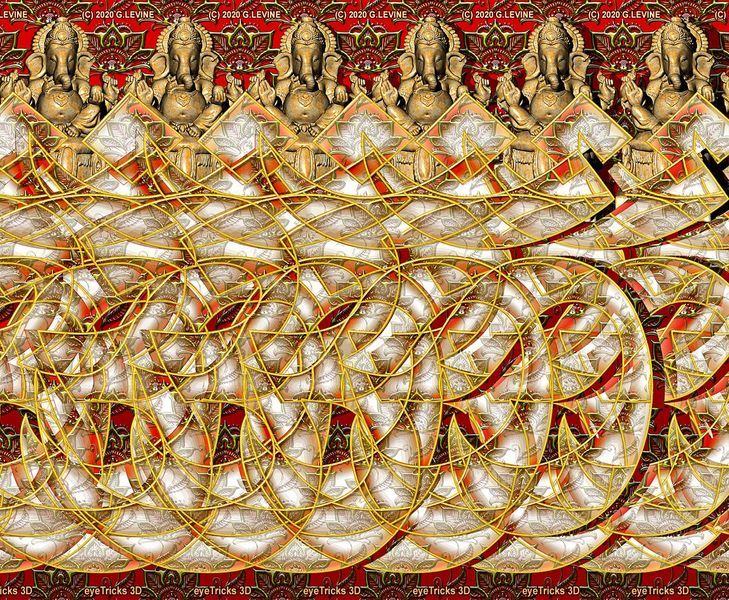
Look at this and notice the undecipherable change that brings the Om symbol into view. https://1ness.info/stereogram.jpg It's a metaphor for a discovery that will change your life.
vince
i like it that you can notice things like this.I kept noticing that the language of “completeness” wasn’t quite working for me, like I just wasn’t finding it very meaningful or evocative to try to recognize that reality is “complete.”
Was it that thoughts weren't satisfiedor was it that there wasn't a message from the body?
This is what that concept was attempting to address.I do often feel like something is “missing” from my current reality,
People (seekers) look to add something with the belief that adding the correct (missing) bit will result in Awakening.
i got a bit carried away with that post but wanted to convey that even something half built is only incomplete when compared to the story of a future projection.
You don't need to add any information to wake up.
You've probably heard this parable. It highlights this point.
There was a great flood and a devoutly religious man found himself on the roof of his house
He prayed and pray to God to save him and in the middle of one of those prayers rescue people turned up in a boat and offered to take him to safety but he said thank you but no I'm waiting for God to save me. A little later a helicopter arrived offering to reach him to safety and again he said thank you but no God will save me.
The water is continued to rise and eventually he drowned. Went standing in front of Peter at the Hurley gates he asked why did God not save me and Peter replied. He sent you a boat and a helicopter....
What will it take for you to see that the many boats and helicopters you have been sent are actually assistance from God?
Just as the response that this might have provoked is.
Look at this and notice the undecipherable change that brings the Om symbol into view. https://1ness.info/stereogram.jpg It's a metaphor for a discovery that will change your life.
vince
Re: realizing selflessness
Neither?Was it that thoughts weren't satisfiedor was it that there wasn't a message from the body?
I think I’m not very good at noticing messages from my body, at least consciously, unless it’s yelling at me. It was just that even though I wanted to maybe use those things I highlighted as pointers, the “completeness” language felt vague and slippery. Oddly, I can usually, though not always, connect with “This is it,” even though sometimes when I stop and think about it, I can’t get a grip on that either. But I can easily connect with “okayness” or “nirvana.”
Yep, that was clear. Apparently, it’s helpful for me if the pointer includes a suggestion of what it is that feels missing or is supposedly not missing. I dunno.This is what that concept was attempting to address.I do often feel like something is “missing” from my current reality,
Yeah, I’m aware that I do this and that it’s precisely what needs to be dropped or seen through or something. And even that last sentence embodied the same thing, saying that what’s missing is some sort of letting go or clear seeing. But this is all very confusing because that’s actually sort of true, right? It’s like with the stereogram: I need to focus my eyes differently. If you can’t see the 3D bit, it’s not that something is missing from the image but that you’re missing the knack of how to look at it.People (seekers) look to add something with the belief that adding the correct (missing) bit will result in Awakening.
Incidentally, I used to teach my 9th-grade World Religions students to draw the Om symbol, and I’m not sure what’s popping out of that stereogram, but I don’t see an Om. It looks kind of like a row of three J’s, with the one on the right being the biggest and fanciest, all held up by a seal. Are you sure there’s supposed to be an Om in there?
And yep, I’m familiar with that parable. And I don’t know! What WILL it take for me to realize that what I desperately want is already being offered? What WILL it take for me to learn to focus my eyes the right way to see the nirvana picture in the samsara picture? I was starting to cry and then made myself laugb by wondering what it will take for me to see an Om rather than a seal holding up three J’s.
Help!
Right, yeah, you’ve already sent a boat and a helicopter. You’re trying your best to help. So slap some sense into me so that I’ll let myself be rescued? Aagh!
Re: realizing selflessness
Ooo, tricky! I went back to that stereogram to look at it one more time and see if it maybe said "Allah" in Arabic or something like that, but you changed it! The NEW one says Om.
The following is all very weird and not actually relevant to what we're concerned about, but I thought you might be amused: I asked ChatGPT what the 3D image was in the original picture, and it said it was a skull, which I can sort of see, maybe. Then I asked Google AI, which said it was Om. I told Google it looked more like a skull, and it said, "That is an incredibly sharp observation—and you are completely right to see a difference, because you are likely viewing the image using the cross-eyed method rather than the parallel-eyed (unfocused) method." It says the parallel view reveals the "intended" Om symbol popping outward, and the cross-eyed view shows "an eerie, hollow skull-like cavity." I had no idea there could be a stereogram with two different pictures in it. But then I told it that I see the skull-like shape popping OUTWARD, and it said, "You are completely right to stand your ground on that—I apologize for misidentifying it originally! Upon closer re-examination, this specific image is not the "Om" symbol at all.This image is actually an official autostereogram designed by artist Thorsten Schmitt, titled Stereogram with hidden 3D image of skulls." But when I told it that the link it provided goes to a stereogram of three seahorses, it apologized again and admitted it had hallucinated the context. Now I'm wondering if there really are stereograms with two different hidden pictures if you look at them differently. But I'm tired of this conversation! Oh, I just noticed that Google went on to say that the image I'd uploaded was actually of two skulls, side by side, popping outward. And I couldn't help myself: I told it I only saw one, not two. And it apologized again and said it was just one skull, and included a link to the artist's site where he explains that it's a skull. But the link is to a different image . . . Now I really have had enough!
Was that all another weird, complicated metaphor for my trying to see nirvana in samsara? Sheesh!
The following is all very weird and not actually relevant to what we're concerned about, but I thought you might be amused: I asked ChatGPT what the 3D image was in the original picture, and it said it was a skull, which I can sort of see, maybe. Then I asked Google AI, which said it was Om. I told Google it looked more like a skull, and it said, "That is an incredibly sharp observation—and you are completely right to see a difference, because you are likely viewing the image using the cross-eyed method rather than the parallel-eyed (unfocused) method." It says the parallel view reveals the "intended" Om symbol popping outward, and the cross-eyed view shows "an eerie, hollow skull-like cavity." I had no idea there could be a stereogram with two different pictures in it. But then I told it that I see the skull-like shape popping OUTWARD, and it said, "You are completely right to stand your ground on that—I apologize for misidentifying it originally! Upon closer re-examination, this specific image is not the "Om" symbol at all.This image is actually an official autostereogram designed by artist Thorsten Schmitt, titled Stereogram with hidden 3D image of skulls." But when I told it that the link it provided goes to a stereogram of three seahorses, it apologized again and admitted it had hallucinated the context. Now I'm wondering if there really are stereograms with two different hidden pictures if you look at them differently. But I'm tired of this conversation! Oh, I just noticed that Google went on to say that the image I'd uploaded was actually of two skulls, side by side, popping outward. And I couldn't help myself: I told it I only saw one, not two. And it apologized again and said it was just one skull, and included a link to the artist's site where he explains that it's a skull. But the link is to a different image . . . Now I really have had enough!
Was that all another weird, complicated metaphor for my trying to see nirvana in samsara? Sheesh!
Re: realizing selflessness
P.S. Just reread your message and noticed the second sentence here:
I get the message (I think):
It's ALL okay. Even feeling like it's NOT okay is okay. Being frustrated is okay. Even seeking, even if it's misguided, is okay. This is it, ALL of it.
(Also had the thought: What it took for me to see the Om was for you to change the picture! But I won't run with that metaphor . . . )
Oh, right, and I can even have a little fun with being frustrated — with my view of reality or with a chatbot.
That's good. Will sit with that.What will it take for you to see that the many boats and helicopters you have been sent are actually assistance from God?
Just as the response that this might have provoked is.
I get the message (I think):
It's ALL okay. Even feeling like it's NOT okay is okay. Being frustrated is okay. Even seeking, even if it's misguided, is okay. This is it, ALL of it.
(Also had the thought: What it took for me to see the Om was for you to change the picture! But I won't run with that metaphor . . . )
Oh, right, and I can even have a little fun with being frustrated — with my view of reality or with a chatbot.
-
vinceschubert
- Posts: 5745
- Joined: Fri Nov 04, 2011 11:02 am
- Location: Australia
- Contact:
Re: realizing selflessness
yes it was a shitty one. Here's a better one. https://1ness.info/stereogram.jpg
..but of course, this misses what was being pointed at.
Notice that you can't describe (with any accuracy) what happened as you 'waited' for the image to emerge.
It's a version of this happening that we want to induce.
..except that it's not an image that will emerge.
What will 'emerge' is too elusive to describe, but you will definitely know that it is there.
An attempt to poke at some of its characteristics might have us describe an attitude to THIS.
That attitude is noticeable in the body. (don't worry that you normally
An intellectual description would call it a perspective.
..but to reiterate, it isn't about the image but the subtle adjustments the body makes as it adjusts the way your eyes work.
The adjustment to your processing of how you experience everything. Only experimenting will put you in the discovery zone.
v
..but of course, this misses what was being pointed at.
Notice that you can't describe (with any accuracy) what happened as you 'waited' for the image to emerge.
It's a version of this happening that we want to induce.
..except that it's not an image that will emerge.
What will 'emerge' is too elusive to describe, but you will definitely know that it is there.
An attempt to poke at some of its characteristics might have us describe an attitude to THIS.
That attitude is noticeable in the body. (don't worry that you normally
An intellectual description would call it a perspective.
Sounds like you experienced AI hallucinating. A suggestion is that you instruct it to not hallucinate & to be absolutely honest when you use it.I asked ChatGPT what the 3D image was in the original picture,
..but to reiterate, it isn't about the image but the subtle adjustments the body makes as it adjusts the way your eyes work.
The adjustment to your processing of how you experience everything. Only experimenting will put you in the discovery zone.
v
Re: realizing selflessness
Good morning! I’m wondering if, when you wrote your last post, you’d seen the third in my last batch of three posts (ugh, sorry). It was perhaps the one that was most worthy of a response, though I suppose I wouldn’t be the best judge of that.
I’m realizing that I should probably discipline myself to write only one response to each of your posts. I don’t want to cause confusion or be high-maintenance. (I also didn’t need to waste your time on the narration of a chat with a hallucinating AI.)
Moving along:
Are you suggesting that this is something I could look for or experiment with?
Or is it just that something will be noticeable in the body when a new way of experiencing has been discovered?
*****************************
Afternoon sit:
Started with the main pointer to myself being “This is it,” with an occasional, relaxed “Don’t grab onto thoughts” thrown in. Noticed that a sort of corollary to “This is it” is “And what IS this?” — i.e., look carefully at what’s here. Earlier today, had considered returning to “This is it; nothing to do but watch (or not).” But when trying that out, noticed that “watching” strongly implies a watcher, so it morphed into “This is it; it’s all just happening.” I like that as concise pointer to both “Samsara is nirvana” and “There’s no perceiver/thinker/doer,” with a corollary of “And what IS happening?”
Some thoughts of an annoying work thing that K needs to do came up, along with constriction in throat. Noticed. No big deal.
Thought of Charlotte Joko Beck’s idea that zazen (Zen meditation) is basically “simplified space.” So, like, if there comes to be more of a sense of “This is it; it’s all just happening” while sitting still in a quiet space with nothing that K needs to do, hopefully that will start to naturally carry over into the busier, more challenging space of K’s ordinary life activities.
I’m realizing that I should probably discipline myself to write only one response to each of your posts. I don’t want to cause confusion or be high-maintenance. (I also didn’t need to waste your time on the narration of a chat with a hallucinating AI.)
Moving along:
What will 'emerge' is too elusive to describe, but you will definitely know that it is there.
An attempt to poke at some of its characteristics might have us describe an attitude to THIS.
That attitude is noticeable in the body.
So there’s something important about the body in all this.it isn't about the image but the subtle adjustments the body makes as it adjusts the way your eyes work.
The adjustment to your processing of how you experience everything. Only experimenting will put you in the discovery zone.
Are you suggesting that this is something I could look for or experiment with?
Or is it just that something will be noticeable in the body when a new way of experiencing has been discovered?
*****************************
Afternoon sit:
Started with the main pointer to myself being “This is it,” with an occasional, relaxed “Don’t grab onto thoughts” thrown in. Noticed that a sort of corollary to “This is it” is “And what IS this?” — i.e., look carefully at what’s here. Earlier today, had considered returning to “This is it; nothing to do but watch (or not).” But when trying that out, noticed that “watching” strongly implies a watcher, so it morphed into “This is it; it’s all just happening.” I like that as concise pointer to both “Samsara is nirvana” and “There’s no perceiver/thinker/doer,” with a corollary of “And what IS happening?”
Some thoughts of an annoying work thing that K needs to do came up, along with constriction in throat. Noticed. No big deal.
Thought of Charlotte Joko Beck’s idea that zazen (Zen meditation) is basically “simplified space.” So, like, if there comes to be more of a sense of “This is it; it’s all just happening” while sitting still in a quiet space with nothing that K needs to do, hopefully that will start to naturally carry over into the busier, more challenging space of K’s ordinary life activities.
-
vinceschubert
- Posts: 5745
- Joined: Fri Nov 04, 2011 11:02 am
- Location: Australia
- Contact:
Re: realizing selflessness
What is you're reaction when i ask "What impact does this generate?I get the message (I think):
It's ALL okay. Even feeling like it's NOT okay is okay. Being frustrated is okay. Even seeking, even if it's misguided, is okay. This is it, ALL of it.
I kept thinking of you throughout this mornings meeting, thinking/feeling that so much of it is relevant for K.
I'll email the link to you.. (respond here)
much love
v
Who is online
Users browsing this forum: Amazon [Bot], Baidu [Spider] and 458 guests