Try Again

All threads where seeing happens are stored here. The complete list, sorted by guide, contains all links. The archives include threads of those that came to LU already seeing as well.
You are welcome to continue your conversation with your guide here after your name is turned blue.
User avatar
poppyseed
Posts: 2691
Joined: Sun May 20, 2018 5:28 pm
Location: South Africa
Contact:

Re: Try Again

Postby poppyseed » Sun Jul 09, 2023 2:58 pm

Hi Frank
Your last two sledge hammer posts have been so rich with unusual perspectives that I'm still spinning and have not found my balance yet. If I'm babbling instead of making sense, that's the reason.
No worries, it will all come into place :)
But I keep wondering. If the idea of a car, a train or an airplane were merely a fiction, neither you nor I would ever set foot in one. The fact that they lack a self-essence and are the result of a lot of different things working together, does not make all of it unreal.
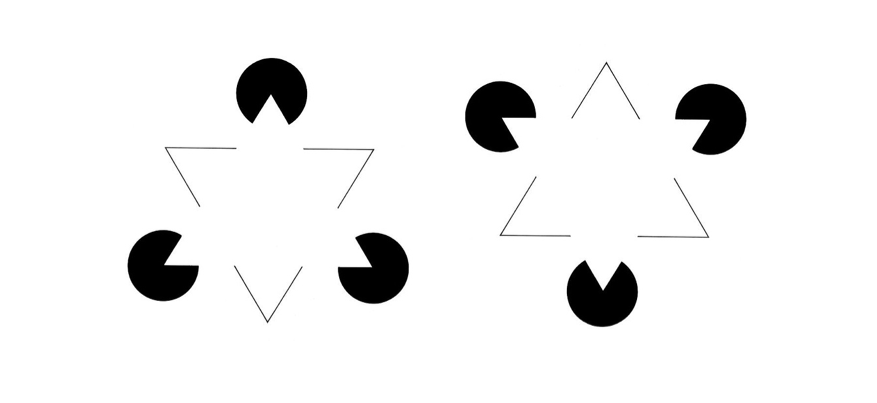
True! But also that is how illusions work – it looks like something else. Like the mirage of an oasis in the desert – it just looks like something else. And the illusion covers not only the “objects” (train, car) but the “subjects” (you, I) and the “activity” (setting foot in one) – the whole language structure is an illusion – while all there is is just seeing, hearing …/THIS, the rest is a story/fiction/”icons on the screen”/a mirage. And because they are an illusion, they or their absence can not affect the reality - like the Kanizsa triangle:
Image
Well, with this new perspective on experience, I can only observe that noticing is simply this: "something showing up in experience."
Or you can look at it as the two sides of a coin – on one side of the spectrum is the noticing/witnessing and on the other is the object/experience – the same structure of language of subject doing something on an object – while all there is, is just THIS (the coin).
(The video you suggested might bring some clarity - https://www.youtube.com/watch?v=7Lm3G0_ ... ex=17&t=8s - is unfortunately no longer available on Youtube.)
That is so strange – if I click on the video it starts… Here is a new link (it works when I try it):
https://www.youtube.com/watch?v=7Lm3G0_ ... 4&index=15
Not sure about focus yet. Tried to focus on (or pay attention to) something several times and what I "notice" is a thought-based narrowing or limitation of experience. I don't grasp this one yet.
Exactly! It’s narrowing or isolating/picking up from the whole what to describe. Do you move it, or it moves by itself?
I start to get this with seeing as well - location, here and there, is part of the thought overlay as well. But it's only a glimpse. With vision, the subject-objection/here-there frame is particularly strong and constantly interferes and reasserts itself in my looking at things.
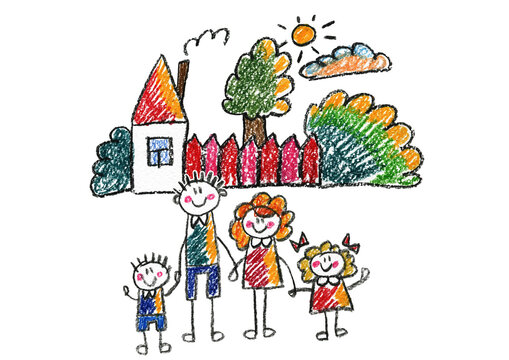
In DE there is only seeing/hearing/etc. and thinking provides the labels. It’s like a picture that everything is drawn in pencil on paper – the illusion of separation is created by different colours used – otherwise it’s all paper.

Image

Different colours in seeing create the illusion of things, distance, etc. but all that is there is seeing. Different levels of sounds create the illusion of a song but all that is there is hearing. Can you see that?
It's like that famous picture with the candle and the two faces: one way of looking dominates for me (the two faces - subject-object/here-there), but with effort I see the other thing too (a total experience). And in that experience as a unity, there is no centre, it is complete in itself, and hence no positions of looking and what is looked at.
And there is nothing wrong with that. Even if you know it is an illusion, it can still look the same after truth about it is known. And that is the difference between an illusion and a delusion.
How are “things done” in DE? What is movement in DE for example?
They simply happen.
I went into the kitchen to get a glass of water. First there must have been a signal of thirst (although I can't remember it really - maybe it was just a habitual pattern playing out, throwing that habitual pattern into the pool of the mind, see if any fish will bite).
I think you misunderstood the question. I meant in more into the spirit of the “apple” and the “cup of coffee” example. What are “things” and how are they “done” in DE (use DE labels)?
There is no one separate form life/THIS/what IS, waiting to wake up to reality. (However, I often feel there is, but there's also the realization that this is exactly the idea that in the flow of my experience has ceased being self-evident.
Remember “feels like” = thought content. If it is there it should be possible to observe its characteristics with respect to the senses, not with thought - some kind of evidence :)
The question I'm not sure about is: "Is there a “me” that gives instructions to “you”? How is this exchange of ideas observed in DE?" With a bird's eye perspective our exchange appears as this movement of type A thoughts in the process of transformation as more type B thoughts are appearing.
Yes! There is hearing (speech)/seeing (the written text) + thought (interpretation of sound or colour) and then further interaction of thoughts trying to self-organise in a new way or going back to the old way (confirmation bias)

Please let me know if there is anything that needs further clarification (time to spend on this) or you are ready to continue
Love
Rali
“Your assumptions are your windows on the world. Scrub them off every once in a while, or the light won't come in.”
― Alan Alda
"The moment I am aware that I am aware I am not aware. Awareness means the observer is not"
― Jiddu Krishnamurti

User avatar
FDM
Posts: 78
Joined: Sat May 20, 2023 6:15 am

Re: Try Again

Postby FDM » Mon Jul 10, 2023 7:38 am

Good morning Rali

I had never heard of the Kanizsa triangle, but it certainly clarifies how an illusion works: what is seen is not what is there - while it doesn't mean there's nothing there, just not what thought makes of it. Point taken.

About focus:
It’s narrowing or isolating/picking up from the whole what to describe.
Do you move it, or it moves by itself?
Neither one.
- That an illusion has no agency and so cannot focus is evident. So no "I" moves it.
- This narrowing has no "narrowing power" by itself either.
In DE, this focussing just happens.
(A particular focus/narrowing could have been prepared by a thousand thoughts and experiences over many years. But in DE, the thought scheme of causality cannot be observed.)
the illusion of separation is created by different colours used – otherwise it’s all paper Different colours in seeing create the illusion of things, distance, etc. but all that is there is seeing. Different levels of sounds create the illusion of a song but all that is there is hearing. Can you see that?
Yes. Clear in both the example of the drawing and the song.
(The illusion is so strong that I was puzzled by the contradiction of the sun shining, the father and son wearing shorts while there's smoke coming out of the chimney. Colours on paper: no father, no son, no smoke, no sun.) Like "the blanket truth" in the movie "I Love Huckabees" ( https://www.dailymotion.com/video/x7zj2u8 ).

Just to double check: in the example of the picture, the paper would be the equivalent of "experience" on/in which other elements show up.
You: Can the 'body' do things?
Me: Things are done and the body is involved or instrumental in them.
You: How are “things done” in DE? What is movement in DE for example? (...) into the spirit of the “apple” and the “cup of coffee” example. What are “things” and how are they “done” in DE (use DE labels)?
Movement in DE:
E.g. a thing getting done: me picking up a pencil:
- idea that I want to underline something: thought
- muscle of my arm moves: sensation
- hand grabs the pen: seeing + sensation
- hand moves the pen over the paper: seeing + sensation + thought
"There is no one separate from life/THIS/what IS, waiting to wake up to reality. However, I often feel there is, (...)." Remember “feels like” = thought content. If it is there it should be possible to observe its characteristics with respect to the senses, not with thought - some kind of evidence :)
Right. I see that the work of enquiry is exactly no to simply let an "I feel" pass by to maintain its illusion unchallenged.

The link for the video you sent worked fine and it very effectively exposed some of the ways in which I've been trying to grasp this. (When copied into Word, only a shortened link was left which didn't work. My mistake.)
It's also a little reminder for me not to make "experience" into some kind of master concept now.
I had to laugh at "the ghost of seeking" - which, painfully, seemed very much like me.
Please let me know if there is anything that needs further clarification (time to spend on this) or you are ready to continue.
I'm still not clear about "the illusion of separation". While - with some effort, never spontaneously - I see that there is no separation in my DE, there is the thought that my DE is not the same as your DE. What shows up for me, doesn't show up for anybody else. Instead of undoing the illusion of separation, DE then puts each of us in a solipsistic separate little universe. Yet we interact and communicate - often successfully.

I leave on Wednesday morning and I'll be gone for 8 days (I can report again on 20 July). I already put many sections from this thread on a word document to take with me - both to let them sink in an "practise" more with some of them. Let me know if there's a better way to proceed. And a few more things to take with me for consideration can certainly be added.

Cheers
Frank

User avatar
poppyseed
Posts: 2691
Joined: Sun May 20, 2018 5:28 pm
Location: South Africa
Contact:

Re: Try Again

Postby poppyseed » Mon Jul 10, 2023 10:58 am

Morning Frank
It’s snowing here which hasn’t happened since 2012. It brings memories of my childhood in Bulgaria :)
On a different note, I can notice a shift happening … :)
In DE, this focussing just happens.
(A particular focus/narrowing could have been prepared by a thousand thoughts and experiences over many years. But in DE, the thought scheme of causality cannot be observed.)
Yes!! Focussing just happens. It is only language/thought that makes the experienced appear separated. When you see a bird in the sky, there is a movement of shapes and colours, labels come up—“bird,” “sky,” “in.”
Can you experience a bird without sky, outside of sky (while looking up)? Can you separate any object out of their environment (whatever it seems to be at THAT moment)?
It’s just like saying that the grass is growing and assuming that there is something called grass that does the growing. It’s one indivisible whole, which can only be divided by words; words that are believed to be real things, objects. Once there is a “bird”, it becomes a “beautiful” or “ugly” “bird”, a ‘dead” or “alive” “bird”, “my” or “your” “bird”, etc, and the stories follow.
Watch this video and observe how thought is immediately trying to find familiar objects, isolate/label them, and create a story about them…
https://www.youtube.com/watch?v=wJyUtbn0O5Y
(The illusion is so strong that I was puzzled by the contradiction of the sun shining, the father and son wearing shorts while there's smoke coming out of the chimney. Colours on paper: no father, no son, no smoke, no sun.) Like "the blanket truth" in the movie "I Love Huckabees" ( https://www.dailymotion.com/video/x7zj2u8 ).
:)))) Yes! Thought immediately spots the “discrepancies” – the should and should nots in what IS simply here.
Movement in DE:
E.g. a thing getting done: me picking up a pencil:
- idea that I want to underline something: thought
- muscle of my arm moves: sensation
- hand grabs the pen: seeing + sensation
- hand moves the pen over the paper: seeing + sensation + thought
Yes! What we’ve assumed to be an “action” is simply sensations (sensing) and colours (seeing), layered with thought. Thought “sees" the change - certain pattern moves from point A to point B and it’s only because the pattern is assumed to be a “thing” that moves in space and in time where there is no space (just seeing/the paper) and no time (just NOW). Where could change happen if there is only NOW? Where could possibly time exist if it is always now? Is there an experience of the ’now’ moving along the line of time? Can you directly experience “30 sec ago”? Is there an experience of one ‘moment’ giving way to the next? How long does the ‘now’ last? Where does the ‘now’ start, and where does it end? When does the ‘now’ exactly become the 'past'?
- I see that there is no separation in my DE, there is the thought that my DE is not the same as your DE. What shows up for me, doesn't show up for anybody else. Instead of undoing the illusion of separation, DE then puts each of us in a solipsistic separate little universe. Yet we interact and communicate - often successfully.
Solipsism suggests an entity that experiences reality. Can you see anything like that? Is THIS a separate thing with parts – my THIS, your THIS, etc? Can you see a border where "your" THIS ends and "somebody else’s" start? Are you confusing “body” with a border? Again, is there an “inside” and an “outside”? Do you experience other people’s DE somehow – you can see it, hear it…? How do you know that you have a personal DE (or you just assume)? How do you directly experience that I have a DE? Wouldn’t that mean a reference point – an experience-er/a self, something that owns it? Is DE some special mode of looking or is it where it becomes obvious what is actually happening? Is there a LOOK-er there? What are “others” in DE (“apple” example)? Remember the father and son wearing shorts in the picture? Are “others” somehow outside of seeing? When you touch 'another', are there two sensations one of 'you' and one of 'other' or just one/just sensing? Are others outside of sensing? Where is the border that marks where sensing ends and "other" begin? Can the “I” of “others” be directly experienced? Can you directly experience "others"?
You said earlier that the feeling of am-ness/being, aliveness is “just being in which everything is taken up.” So where could possibly lie the line that separates “my” being from “yours”?
We’ve assumed so much our whole lives and we never questioned it. Here we do the opposite – we question everything that we’ve taken for granted.
I leave on Wednesday morning and I'll be gone for 8 days (I can report again on 20 July). I already put many sections from this thread on a word document to take with me - both to let them sink in an "practise" more with some of them. Let me know if there's a better way to proceed. And a few more things to take with me for consideration can certainly be added.
Maybe if you answer all of these today, I can give you tomorrow more exercises to take on your trip. Please let me know if you would have the time
Love
Rali
“Your assumptions are your windows on the world. Scrub them off every once in a while, or the light won't come in.”
― Alan Alda
"The moment I am aware that I am aware I am not aware. Awareness means the observer is not"
― Jiddu Krishnamurti

User avatar
FDM
Posts: 78
Joined: Sat May 20, 2023 6:15 am

Re: Try Again

Postby FDM » Tue Jul 11, 2023 8:31 am

Hi Rali

While you have snow, I'm writing this at 27°C. Snow always reactivates my child-mind, looking at everything with new eyes - the sun does no such thing. With DE I also need a new pair of eyes - or simply stop feeding them with my out-of-date thought programs.
Can you experience a bird without sky, outside of sky (while looking up)? Can you separate any object out of their environment (whatever it seems to be at THAT moment)?
No, not possible.
Yet, language and thought do nothing but that.
Even logic, with its basic distinction between a and -a, while there could be no -a without a.
(A bit similar to the post/structuralist idea that there's absolutely nothing that could be outside of the con/text; anything that can be identified is always part of a differential system.)
Watch this video and observe how thought is immediately trying to find familiar objects, isolate/label them, and create a story about them…
My knowledge of cell biology lies too far in the past to be able to grasp what's happening in "The Inner Life of the Cell" video you sent. What did immediately occur was the thought: how could I ever claim this as "me" or "mine" when I don't even know how it works or what is going on (a most pernicious form of psychological colonization: not even knowing what I claim).
Where could change happen if there is only NOW?
Only in thought: change is then a thought with as its content a comparison between situation/thought A and situation/thought B
Where could possibly time exist if it is always now?
Only in thought: time is then a thought with as its content a comparison between point in time/thought A and point in time/thought B.
Is there an experience of the ’now’ moving along the line of time? Can you directly experience “30 sec ago”?
No, both rely on memory (thought with past content)
Is there an experience of one ‘moment’ giving way to the next?
No, all I can find is a thought with a reflection on a past moment.
How long does the ‘now’ last?
All the time - it can never be not now. (Except in thought: memory and planning or prediction.)
Where does the ‘now’ start, and where does it end?
No starting point and no end to be found in DE.
When does the ‘now’ exactly become the 'past'?
The now never becomes the past - but the beginning of the past is introduced in the now with a thought.

That means that listening is always caught up in time and thought: a melody or a word need time be expressed (and constructed with hindsight).
Solipsism suggests an entity that experiences reality.
After the 4th word ("entity") I already realized the wrong assumption my train of thought was built on - how I had sneaked in a thought category into DE - and the rest had to fall like dominoes:
Can you see anything like that?
Is THIS a separate thing with parts – my THIS, your THIS, etc?
Can you see a border where "your" THIS ends and "somebody else’s" start?
No, no separate entities.
No, without thought no my this and your this.
No, without thought no border between entities because no entities in the first place.
Are you confusing “body” with a border?
Yes, once again that slips in - not even like thief in the night, but like a regular customer in broad daylight.
Again, is there an “inside” and an “outside”?
No. (And once again, I went back to sound with my eyes closed; this is still so unusual that I need to confirm this in DE again and again.)
Do you experience other people’s DE somehow – you can see it, hear it…?
How do you know that you have a personal DE (or you just assume)?
How do you directly experience that I have a DE? Wouldn’t that mean a reference point – an experience-er/a self, something that owns it?
Yes, personal DE is a contradiction in terms: no person in DE. So there is no experiencing someone's DE, let alone "mine".
So there's no "relating" of any kind in DE. To relate you would need two independent, unrelated entities, and that's just not there. (I know I just wrote it down, but I still need time to let this sink in.)
Is DE some special mode of looking or is it where it becomes obvious what is actually happening?
It's not a special mode: it's the mode without the conceptual filters. (But because the conceptual programs have been running the system for so long, it appears as a special mode. So I have to make an effort, it doesn't come naturally.)
Is there a LOOK-er there? What are “others” in DE (“apple” example)? Remember the father and son wearing shorts in the picture? Are “others” somehow outside of seeing?
No separate entity, no look-er.
Others in DE: always thought + (optional) one or all of the following: seeing, hearing, smelling, touching.
There can be no me outside of DE and so no others either.
When you touch 'another', are there two sensations one of 'you' and one of 'other' or just one/just sensing?
This is the question that yields up most inner protest. (I'm answering this one last; I left it open and first answered the next ones.) I can almost feel my mind struggling to get out of this, not wanting to accept where it is going.
Here:
- there is touching (no me or you thought constructs)
- there is sensation (not two - even to say "one" already feels like an unnecessary detour via the mental possibility of difference and separation)
The logic of this leaves me no wriggling room, yet I hear the "But"s, but nothing follows them.
Are others outside of sensing? Where is the border that marks where sensing ends and "other" begin?
No; no border, no separated parts in experience. (Just went back to the hearing sound to clarify this.)
Can the “I” of “others” be directly experienced? Can you directly experience "others"?
No, no. There is not even a me to be directly experienced, so definitely no "other".
You said earlier that the feeling of am-ness/being, aliveness is “just being in which everything is taken up.”
Yes!
So where could possibly lie the line that separates “my” being from “yours”?
Only in thought, which would establish different beings and positions like me and you.
My mind is still returning to the relating thing. Relating is connecting in thought. Without thought everything is already connected in DE, or rather simply there (connection implies a notion of different things that are connected).

Thanks for completely undermining my suggestion (about solipsism) through your questioning and clarifying a few other things in the process. You could have just said "it's just a thought", but your questions approached this from every possible angle, so that there was no escape or exit left. Wonderful.
I can give you tomorrow more exercises to take on your trip. Please let me know if you would have the time
I plan to make some time to investigate. Without additional questions, this is what I will focus on:
Starting from the feeling of aware-ing”/knowing/being/ aliveness - me not "doing" experience (7 July post):
- return experience to 5 senses and thought (5 July post)
- noticing the limits of time (always now!) and space (no here and there!) (10 July)
- noticing separation/unity (9 July), especially in relation to others (10 July) which I'm still grappling with.

I'll report about what I did and what I found out (if anything) when I return. It has been a great week of investigation for me. Thanks.

Cheers
Frank

User avatar
poppyseed
Posts: 2691
Joined: Sun May 20, 2018 5:28 pm
Location: South Africa
Contact:

Re: Try Again

Postby poppyseed » Tue Jul 11, 2023 11:26 am

Hi Frank
I can see things are starting to sound a lot more cheerful on your side :)
Yet, language and thought do nothing but that.
Even logic, with its basic distinction between a and -a, while there could be no -a without a.
(A bit similar to the post/structuralist idea that there's absolutely nothing that could be outside of the con/text; anything that can be identified is always part of a differential system.)
Yes!! Logic is a path made of truth from a presupposition to a conclusion. The presupposition might be accurate or inaccurate so logic shows the truth only if we know something else that is true. So far we’ve seen that the bare foundations of thought – concepts - are not accurate, are a fiction. So doesn’t that mean that the stories made of these concepts – logical or not – are also fiction?
Even maths is valid only within the parameters set. If you take two integers and use the standard addition law, then, yes, two plus two equals four. But there are many other things those numbers could stand for and many other addition laws, and depending on your definition, two plus two might be two or one or five or really anything at all. 2+2 isn’t always equal to four. And I don’t just mean that you could change the symbol “4” with the symbol “5”. You can do that of course, but that’s not the point. The point is that two plus two is a symbolic representation for the properties of elements of a group. And the result depends on what the 2s refer to and how the mathematical operation “+” is defined. Strictly speaking, without those definitions 2+2 can be pretty much anything :). For example, if you add one water drop to another, how many drops would you have? :)
This is the question that yields up most inner protest. (I'm answering this one last; I left it open and first answered the next ones.) I can almost feel my mind struggling to get out of this, not wanting to accept where it is going.
Here:
- there is touching (no me or you thought constructs)
- there is sensation (not two - even to say "one" already feels like an unnecessary detour via the mental possibility of difference and separation)
The logic of this leaves me no wriggling room, yet I hear the "But"s, but nothing follows them.
So there's no "relating" of any kind in DE. To relate you would need two independent, unrelated entities, and that's just not there. (I know I just wrote it down, but I still need time to let this sink in.)
So keep on doing it. Thought needs time to recalibrate and reorganise. Resistance only shows what needs further exploring or reinforcing.
When someone we know dies, it takes time for that to "sink in". It's not that we don't believe that the person has died. It is just they are still part of our lives - we open the wardrobe and their clothes are still there, we walk in the park and we remember when we used to do it together. It takes time to readjust our lives to living without them. That process of “sinking in” can be observed in many other situations – like being diagnosed with a life changing disease, losing a job that we had for a long time etc. Even though the change is sudden and quick, it can be perceived as a long process – it can feel as though something is still sinking in, or hasn’t yet sunk in.

The point applies equally to habitual patterns of thought and activity, which similarly reflect how our lives are organised. When the established patterns of a life are disturbed, thought cannot adapt to all of this in an instant, simply by revising all of our old beliefs. Much of the old organisation lingers on, in the guise of a world that we continue to experience and in habitual patterns of thought and activity that our surroundings continue to elicit. That very much applies to seeing the illusion of an “I” - it’s quite a sudden change with a relatively long process of adapting to this change. The recognition of no self is just the beginning of seeing life and “yourself” in a new light. It takes time to clean up all old beliefs and conditioning.

To “deal” with this, question everything (thoughts), and little by little you will notice changes in everyday life: less judgment, more openness; less thinking, more appreciation; less story, more being; less structure, more flow. You will notice that some habitual thoughts no longer arise. The story changes in a way that allows more space for simply being.
There might still be expectations, confusion, and doubt. That’s quite normal at this stage. You may be swaying between “I get it” and “I don’t get it.” You may be thinking that this is not enough, that some experiences need to happen, that you should be happy and blissful all the time. When these thoughts arise, bring the focus to what is present here now. Just THIS. And look again: what is here that wants THIS to be different (including the presence of doubtful thoughts)?
Thanks for completely undermining my suggestion (about solipsism) through your questioning and clarifying a few other things in the process. You could have just said "it's just a thought", but your questions approached this from every possible angle, so that there was no escape or exit left. Wonderful.
It is my pleasure :)! The only way to address logical thinking is with bombarding it with extra evidence – seeing it from all sides. Or at least that was my personal experience ;)
I plan to make some time to investigate. Without additional questions, this is what I will focus on:
Starting from the feeling of aware-ing”/knowing/being/ aliveness - me not "doing" experience (7 July post):
- return experience to 5 senses and thought (5 July post)
- noticing the limits of time (always now!) and space (no here and there!) (10 July)
- noticing separation/unity (9 July), especially in relation to others (10 July) which I'm still grappling with.
Sounds like a good plan. We can explore thoughts just a bit more – just to cover all bases. I've realised that I have taken some things for granted. Have fun with these exercises:
For the next exercise I want you to sit somewhere quiet and observe thoughts.
A thought appears.
In that moment is there anyone or anything which recognises the thought or is being aware of it?
Can you see anything that is separate from the thought and does the thinking?
Did you do anything to make a particular thought or thoughts appear? Could you have done anything to make a different thought appear at that exact moment instead? Can you select from a range of thoughts to have only pleasant thoughts?
Is there anything that is responsible for the thoughts like a traffic cop saying which one to go and which one to stay? Can the flow of thoughts be changed?
Where do thoughts appear from? Do they appear randomly or in a structured way?
Watch like a hawk.

Write down a sequence of 5 thoughts in the order that they appear. Now check:
Could you predict the order of their appearance?
Did you know which will be the second or the fourth?
Is it possible to prevent a thought from appearing? Can you stop thinking a thought in the middle? How long does that last?
Test it for the fun of exploration.
It seems that thought has some logical ordered appearance, but look carefully and just notice if there is an organised sequence. Or is it just another thought that says ‘these thoughts are in sequence’ or “they take content from previous thought”, or that "one thought follows another thought"?

Are thoughts 100% true?
What are you, when you don't think about what you are?


It’s up to you if you want to leave this for when you come back. We’ll explore the decision maker after the thinker.

Enjoy your travels and be safe!
Love
Rali
“Your assumptions are your windows on the world. Scrub them off every once in a while, or the light won't come in.”
― Alan Alda
"The moment I am aware that I am aware I am not aware. Awareness means the observer is not"
― Jiddu Krishnamurti

User avatar
FDM
Posts: 78
Joined: Sat May 20, 2023 6:15 am

Re: Try Again

Postby FDM » Fri Jul 21, 2023 8:39 am

Hi Rali

Back for more investigation!
I was afraid I might backslide while I was gone (while secretly hoping things might become clearer while going over them again in a different context). As it is, things seem to be pretty much the same where I left off last week. Understanding things more and more clearly and being convinced by the arguments (but not "seeing" it).
I managed to enquire every day and I wrote down quite a few things based on observations or experience - but with the benefit of hindsight not much that would add anything. The first couple of days my main enquiry questions used "who" most of the time (who is doing this, who is having this experience, etc.). The last couple of days, this changed to "What is here?" or "What is this", trying to "grasp" or "receive" more of the totality of experience, rather than looking for who or breaking experience down in terms of the senses and thought.

Below the questions from your last post that were left unanswered
So doesn’t that mean that the stories made of these concepts – logical or not – are also fiction?
Yes, they are fiction. Which doesn't mean bad.
While travelling (by train) through some cities, some of the meanings and concepts that were added to vision related to the rich history of some of these places. I felt that historical meanings enriched the vision - while also realizing how easy it is to confuse the two and how that might lead to all kinds of unwholesome manipulations.
For example, if you add one water drop to another, how many drops would you have? :)
One. (Or three, conceptually - but deleting also concepts would also wipe away "one").
We can explore thoughts just a bit more – just to cover all bases.
Please. Let's leave no stone unturned.
A thought appears.
In that moment is there anyone or anything which recognises the thought or is being aware of it?
No, the thought is how the aliveness/being/awareness of that moment appears.
Can you see anything that is separate from the thought and does the thinking?
No. (Like that line in one of Yeats's poems: "How can we know the dancer from the dance?")
Did you do anything to make a particular thought or thoughts appear?
No. (The problem in the question is "you do".) For example, there's an interest in enquiry, there's an intention to "do" this frequently, so more enquiry questions appear than a year ago. But, then again, the intention and the interest are also thoughts. It's turtles all the way down.
Could you have done anything to make a different thought appear at that exact moment instead?
No. (The problem with the question is "that exact moment" and, of course, "you". Intention and interest (thoughts) in X may be a signal that more X thoughts will occur.
Can you select from a range of thoughts to have only pleasant thoughts?
No. Intentions and interests (= thoughts) can lead to certain themes being revisited.
Is there anything that is responsible for the thoughts like a traffic cop saying which one to go and which one to stay?
No, not an almighty traffic cop. (They are sometimes related to previous thoughts and concerns - for which there was no cop either.)
Can the flow of thoughts be changed?
Distraction. If I wanted a particular train of thought to stop, I might hurt myself so that that strong sensations would replace that particular flow. BUT in this case there is of course also the thought which makes this suggestion.
(On the train I admired how a mother skilfully managed to stop a crying child's train of thought a couple of times. The third or fourth time, she simply ignored it and then it petered out by itself.)
Where do thoughts appear from? Do they appear randomly or in a structured way?
In DE they just show up, as if they are their own origin.
In theory (thought) one could mention the laws of association, memory, significance, value systems, experience, etc.

Write down a sequence of 5 thoughts in the order that they appear. Now check:
Could you predict the order of their appearance?
Did you know which will be the second or the fourth?
No and no.
Is it possible to prevent a thought from appearing?
No, the idea to prevent a thought will have the opposite effect and make the thought appear.
Can you stop thinking a thought in the middle?
I remember once hitting my head on a traffic sign while walking. That immediately stopped the thought I was having then.
In meditation an intention can be formulated to return to, for example, the breath or the senses whenever thinking is noticed. That might be the beginning of a thought, the middle or at the end (how to measure this?).
Thoughts can be cut off after they have started by intentionally switching to another thought. (This seems like an excellent way to give oneself a headache.)
How long does that last? Test it for the fun of exploration.
A couple of times. One could perhaps extend it into more than a minute with some skill. I didn't do this for more than 15 seconds - there was no "fun" to be experienced in this exploration at all. (It's a bit like holding one's breath: it can't be done indefinitely.)
It seems that thought has some logical ordered appearance, but look carefully and just notice if there is an organised sequence. Or is it just another thought that says ‘these thoughts are in sequence’ or “they take content from previous thought”, or that "one thought follows another thought"?
As mentioned (in the last question to the previous series of questions): In DE they just show up, as if they are their own origin. In theory (= after-thought) one could mention the laws of association, memory, significance, value systems, experience, etc. Science must have a predictive power to be valid: with thought, one could occasionally hit the jackpot, but still not enough to warrant a trip to Las Vegas with the certainty of winning.
Are thoughts 100% true?
Certainly not.
At best some thought may be a good representation of truth.
What are you, when you don't think about what you are?
Nothing that can be thought (or put into words), but "experiencing" might come close to describing it.

Have a good weekend (we started early here because of the national holiday).
Frank

User avatar
poppyseed
Posts: 2691
Joined: Sun May 20, 2018 5:28 pm
Location: South Africa
Contact:

Re: Try Again

Postby poppyseed » Sat Jul 22, 2023 10:46 am

Hi Frank

Happy to have you back :). I hope it was a good trip!
I can see some old thoughts are starting to creep back but we’ll deal with them :)
Understanding things more and more clearly and being convinced by the arguments (but not "seeing" it).
I hope one day you’ll be able to laugh at this sentence :)).
What is that which doesn’t “see” but “understands” it? Who/what is getting convinced? Thought???
Again, is there an "I" that can wake up or be awake? What is it that could be awake? What is it that awakening could happen TO? What is outside of THIS that wants to “see” it, “understand” it, "get" it?

This sounds very much like an enlightened story. Thought LOVES that – to assess “things”, measure “progress”, set goals and fail them ;)), set expectations of how "things" should feel when "you see it" - e.g. laugh like crazy, ever lasting bliss and happiness, all the bells and whistles :)) Expectations are the biggest obstacles to seeing this moment as it is. You are seeing it already, just the mind says no; it’s like being used to one thing and expecting that to change. You are trying too hard. Stop trying. Looking is a matter of noticing what is already here, not inventing or imagining something that needs a huge amount of energy to sustain. It’s not mental gymnastics, and there’s no medal at the end. Soften, breathe—smile even and just notice what IS here.

So how can you not see it? When you open your eyes is there no seeing? Can you not hear, taste…? It is just THIS. It’s really that simple. Instead of endlessly reaching for ideas, concepts and explanations, just let it all go, and see. Just see what is here now silently, without words. Just notice what is left when you stop thinking about it. Just relish the not knowing. Truth or reality is not an idea or a belief. It cannot be grasped by thoughts. It does not need to be understood by the intellect. Actually, it is impossible to understand through thoughts. It is inconceivable, ungraspable. And yet, it can be directly seen. Seeing is wordless, and immediate. The taste of chocolate is immediately and silently (wordlessly) known, since it is not conceptual. As soon as the label ‘taste of chocolate’ is added, the immediacy of experience is veiled by conceptualization. Any form of description is an abstraction, which is added after the immediate experience.
Can you see it? :)
Yes, they are fiction. Which doesn't mean bad.
While travelling (by train) through some cities, some of the meanings and concepts that were added to vision related to the rich history of some of these places. I felt that historical meanings enriched the vision - while also realizing how easy it is to confuse the two and how that might lead to all kinds of unwholesome manipulations.
How are thoughts enriching THIS, when they are part of THIS? Is the thinking somehow outside of THIS? There is nothing wrong with the story as long it is seen as empty. I don’t know if you are familiar with the Buddhist term of emptiness. Because everything is dependently originated (concept upon concept upon concept), nothing has any self-nature or essence.
One. (Or three, conceptually - but deleting also concepts would also wipe away "one").
Yes!! It was actually a rhetorical question pointing to the fact that logic is only true/accurate within the parameters set. I hope that was clear.
No. (The problem in the question is "you do".) For example, there's an interest in enquiry, there's an intention to "do" this frequently, so more enquiry questions appear than a year ago. But, then again, the intention and the interest are also thoughts. It's turtles all the way down.
Yes!! And the distinction between my thoughts and yours…’Me’ saying “something” or “writing it”, “you” “interpreting” the written or the heard… - it’s all thought (no one’s). Basically all has to be in “”. Nothing is how thought describes it :))
Distraction. If I wanted a particular train of thought to stop, I might hurt myself so that that strong sensations would replace that particular flow. BUT in this case there is of course also the thought which makes this suggestion.
What is a “distraction”? Should THIS not have happened like that? What says that this is not how it was supposed to go in the first place? Thought?
In meditation an intention can be formulated to return to, for example, the breath or the senses whenever thinking is noticed. That might be the beginning of a thought, the middle or at the end (how to measure this?).
Can a thought do anything? Can a thought hear, see, think…? OR it just describes what is already happening?
Thoughts can be cut off after they have started by intentionally switching to another thought. (This seems like an excellent way to give oneself a headache.)
“Cut off” by whom? Another thought? What suggests that thoughts should follow a particular pattern? Is there an already written plan/script how thoughts are supposed to go? Is there a place where they are stored and retrieved in a particular order? LOOK! The more you investigate the more holes you'll start to see in the story…
In theory (= after-thought) one could mention the laws of association, memory, significance, value systems, experience, etc. Science must have a predictive power to be valid: with thought, one could occasionally hit the jackpot, but still not enough to warrant a trip to Las Vegas with the certainty of winning.
We are not interested in what thought says but what is actually happening. Thought has been saying unchecked stuff for a while. Science still works with concepts, creating/isolating “things” and observing relationships among them where there is only THIS/whole/ What IS, so basically still a fiction.

Also, where could possibly the prediction and the result happen if there is only NOW? And where can one thought follow another if there is only NOW? How can you know where one thought finishes and another starts without their content? Memories/thoughts come and say that stuff has happened already, a thought was followed by another thought (in sync or not) or an action, but where exactly is that time line that things have to happen neatly following each other? Do you see how thought start to crumble when you start actually looking in what is really happening?
What are you, when you don't think about what you are?
Nothing that can be thought (or put into words), but "experiencing" might come close to describing it.
Are “you” the experiencing? Is experiencing personal? Why is it not “me” that is the experiencing? Are you the “experiencer”? Are you the center where all is happening? This is very subtle to what I am pointing here. Just notice, is there a reference point or subjective pole for what is experienced? Are you anything at all?

Love
Rali
“Your assumptions are your windows on the world. Scrub them off every once in a while, or the light won't come in.”
― Alan Alda
"The moment I am aware that I am aware I am not aware. Awareness means the observer is not"
― Jiddu Krishnamurti

User avatar
FDM
Posts: 78
Joined: Sat May 20, 2023 6:15 am

Re: Try Again

Postby FDM » Sun Jul 23, 2023 11:28 am

Hi Rali
"Understanding things more and more clearly and being convinced by the arguments (but not "seeing" it)."
I hope one day you’ll be able to laugh at this sentence :)).
So do I. Since I'm still very serious about the first sentence I realise I have a long long way to go (to get to right here).
What is that which doesn’t “see” but “understands” it? Who/what is getting convinced? Thought???
Let me exclude the last one first. Thought is just representation, a tool.

There must be a difference between understanding and not understanding - after a teacher has explained something, some students may understand and some students may not understand. The understanding and the not understanding will show up, be represented or expressed as subsequent thoughts. If you would write something in Bulgarian, I would not understand it, but somebody else would. So there is a difference between understanding or not understanding which can be observed in subsequent thought or action.

What is it that understands? The same being/aliveness/knowing/awaring that sees the seeing, hears the hearing, etc. (A corpse will not hear and see, although the physical organs to do so are still there.)

Of the 10 questions you asked this one still baffles me the most (so it is the most important one for me).
Again, is there an "I" that can wake up or be awake? What is it that could be awake? What is it that awakening could happen TO? What is outside of THIS that wants to “see” it, “understand” it, "get" it?
There is no "I" that can wake up.
There is an illusion of "I" (a thought construct) that falls away.
There is nothing outside of "this".

And then I ask: falls away from what? "Falls away" = no longer appearing with great frequency.
I wanted to add: no longer being believed in, but then the question is: who believes?
So how can you not see it? When you open your eyes is there no seeing? Can you not hear, taste…? It is just THIS. It’s really that simple. (...) Can you see it? :)
When I open my eyes I see; when there's sound I hear, etc. That part is true. But then my overactive mind has some skin in the game too and has gratuitously provided me with fogged up coloured glasses so that I keep seeing the triangle in the Kanisza triangle. Sometimes I think I've taken them off, and then your mail point out I still have them on.
I feel like I cannot but strain and try: the switch in perspective is so different from the habitual perspective that mental gymnastics is the order of the day. I see where I go wrong: rather than stop believing in this "I" illusion, I want to take the idea that "I" is an illusion as an idea the "I" can have and take along.
How are thoughts enriching THIS, when they are part of THIS? Is the thinking somehow outside of THIS? There is nothing wrong with the story as long it is seen as empty.
Right. Thoughts are not "outside" of this. So, there's a place for history, literature, philosophy, science, etc. as long as the concepts and ideas are seen as empty and not confused with this.
What is a “distraction”? Should THIS not have happened like that? What says that this is not how it was supposed to go in the first place? Thought?
Yes, distraction is a mental category imposed on whatever is happening (resulting from an evaluation in comparison with other mental standards or predictions). Only thought could say that something was not supposed to go the way it went.
Can a thought do anything? Can a thought hear, see, think…? OR it just describes what is already happening?
A thought itself cannot hear, see or think.
If you had given me the instruction to look at a cup, I would have done so. In that case the writing on the screen would have been interpreted or understood (= thought) before I carried out the instruction. So here thought precedes what is happening. Without understanding the instruction, it would not be carried out.
“Cut off” by whom? Another thought? What suggests that thoughts should follow a particular pattern? Is there an already written plan/script how thoughts are supposed to go? Is there a place where they are stored and retrieved in a particular order?
Also, where could possibly the prediction and the result happen if there is only NOW? And where can one thought follow another if there is only NOW? How can you know where one thought finishes and another starts without their content?
Right: the idea of "cutting off" can only result from a mental order/expectation overlay.
In DE all that happens is thought occurring. Indeed, even to say: one thought occurring one moment, another thought another moment, one would already need the content of thought or a theory of connection.
Memories/thoughts come and say that stuff has happened already, a thought was followed by another thought (in sync or not) or an action, but where exactly is that time line that things have to happen neatly following each other? Do you see how thought start to crumble when you start actually looking in what is really happening?
Yes. No time line. So much of habitual "reality" turns out to be a thought construct, that I feel as if I'm in kindergarten again.
What are you, when you don't think about what you are?
"Nothing that can be thought (or put into words), but "experiencing" might come close to describing it."
Are “you” the experiencing?
There is experiencing. "Me" is a thought construct in that experience.
Is experiencing personal?
To the extent that thought is part of experience, the experience may be coloured by characteristics of a character/personality
(Once again, my first inclination was to say that everybody's experience is obviously different. And then I realized how many theoretical assumptions I was making as a matter of fact: the me/you positions, the me apart from experience, etc.)
Why is it not “me” that is the experiencing? Are you the “experiencer”? Are you the center where all is happening?
There is experiencing.
Any "me" is a position or a part that is mentally carved out from that experience. All the more for the designation of that me as a centre.
Just notice, is there a reference point or subjective pole for what is experienced? Are you anything at all?
There is experiencing. A reference point, a subjective and objective pole, anything identified would be a theoretical imposition/subdivision of the experiencing.

I feel like this was a difficult exam paper I failed and that I need to go back to kindergarten. I know you asked me to stop trying, but your questions which show how I'm still habitually looking from and "I"-centred perspective, make me want to try all the more.

Cheers
Frank

User avatar
poppyseed
Posts: 2691
Joined: Sun May 20, 2018 5:28 pm
Location: South Africa
Contact:

Re: Try Again

Postby poppyseed » Sun Jul 23, 2023 3:15 pm

Hi Frank
I feel like this was a difficult exam paper I failed and that I need to go back to kindergarten. I know you asked me to stop trying, but your questions which show how I'm still habitually looking from and "I"-centred perspective, make me want to try all the more.
First let me start with, there is no such thing as failing as there is no one to fail. It is just thought reorganising itself around the experience. It might take a day, it might take a year or a few, depending on the accumulated conditioning/ established links), but it will happen eventually on its own:).
What is that which doesn’t “see” but “understands” it? Who/what is getting convinced? Thought???
Let me exclude the last one first. Thought is just representation, a tool.
And here is where “you” are wrong :). What could be understood outside of thought where all the meaning is? Meaning is assigned in thought, based on concepts and the realtionship among them. We've seen the emptiness of concepts already with the "apple" example. Where could possibly cause and effect live, if outside of thought there is no space and time? Do you see how impossible is to “understand” THIS? Basically trying to apply a 3D rules on reality where there are no dimensions:). And yet there is THIS/ aliveness – knowing_seeing_hearing_tasting_smelling_sensing_thinking directly experienced. Like eating a real chocolate vs imagining eating a chocolate. Try for yourself and compare the experience, see the richness of the one vs the other, how undescribable the experience is. Try desribing what eating chocolate is to someone who hasn't tried it before ;)
There must be a difference between understanding and not understanding - after a teacher has explained something, some students may understand and some students may not understand. The understanding and the not understanding will show up, be represented or expressed as subsequent thoughts. If you would write something in Bulgarian, I would not understand it, but somebody else would. So there is a difference between understanding or not understanding which can be observed in subsequent thought or action.
Does life depend on how you will describe it? A few centuries ago, when there was a earthquake, people would say that the gods are angry. Today, we know differently but earthquakes still happen despite us knowing better. Understanding is just the meaning we attach to whatever is happening. But besides thought content, life doesn’t need meaning to happen, it just DOES. The story changed - how we see/describe the world and our actions in it.
Yes, language is important as a carrier of meaning/information, the story is also THIS, but is it necessary for THIS?
This is exactly what we are doing here – we can’t change THIS, we just changing the story ABOUT THIS that it reflects it as closely as possible (still fiction by the way). And that is why we have “Liberation Unleashed is not …” in the FAQ’s of LU. Most people expect that their lives would change as a result of the inquiry, while all is changed is the story. Pain still happens, it still rains on certain days etc, but the story "allows" room for more being and surrendering to what IS :)
If you had given me the instruction to look at a cup, I would have done so. In that case the writing on the screen would have been interpreted or understood (= thought) before I carried out the instruction. So here thought precedes what is happening. Without understanding the instruction, it would not be carried out.
That still presupposes a “me” to give an instruction to “you”. Look what is really happening in DE in “that situation”. There is sound (hearing), thought (interpretation of the sound/description of the sound), sensations, seeing,…(labelled "action") and more thought (description of sensations, seeing…). Do you see how the story changes? Do you see how the "listener" and "doer". "me" and "you", "my thoughts" and "your thoughts" became redundant?
It was thought content in the first place which conceptualised these “things”/”events” as separate and saw a relationship among them in time and space (cause and effect). So yes, if “I” speak in Bulgarian, there is still sound but with no interpretation “followed” by actions (sensations …) described as “not understanding and doing what I think I should be doing”. Only thought would suggest that “things” would have been different if “you understood”. It is just the story layered above the experienced that is different. Whatever happened, happened in the only way possible. Thoughts rushed in to create a story about it.
When I open my eyes I see; when there's sound I hear, etc. That part is true. But then my overactive mind has some skin in the game too and has gratuitously provided me with fogged up coloured glasses so that I keep seeing the triangle in the Kanisza triangle. Sometimes I think I've taken them off, and then your mail point out I still have them on.
"Crossing the gate" is only a beginning, not an end. Nothing changes, but everything looks different. The recognition of no self is just the beginning of seeing life and “yourself” in a new light. It takes time to clean up all the "mess", to settle in and adjust.
When someone we know dies, it takes time for that to "sink in". It's not that we don't believe that the person has died. It is just they are still part of our lives - we open the wardrobe and their clothes are still there, we walk in the park and we remember when we used to do it together. It takes time to readjust our lives to living without them. That process of “sinking in” can be observed in many other situations – like being diagnosed with a life changing disease, losing a job that we had for a long time etc. Even though the change is sudden and quick, it can be perceived as a long process – it can feel as though something is still sinking in, or hasn’t yet sunk in.

The point applies equally to habitual patterns of thought and activity, which similarly reflect how our lives are organised. When the established patterns of a life are disturbed, thought cannot adapt to all of this in an instant, simply by revising all of our old beliefs. Much of the old organisation lingers on, in the guise of a world that we continue to experience and in habitual patterns of thought and activity that our surroundings continue to elicit. That very much applies to seeing the illusion of an “I” - it’s quite a sudden change with a relatively long process of adapting to this change. It takes time to clean up all old beliefs and conditioning.

To “deal” with this, question everything, and little by little you will notice changes in everyday life: less judgment, more openness; less thinking, more appreciation; less story, more being; less structure, more flow. You will notice that some habitual thoughts no longer arise. The story changes in a way that allows more space for simply being.
There might still be expectations, confusion, and doubt. That’s quite normal at this stage. You may be swaying between “I get it” and “I don’t get it.” You may be thinking that this is not enough, that some experiences need to happen, that you should be happy and blissful all the time. When these thoughts arise, bring the focus to what is present here now. Just THIS. And look again: what is here that wants THIS to be different (including the presence of doubtful thoughts)?
(Once again, my first inclination was to say that everybody's experience is obviously different. And then I realized how many theoretical assumptions I was making as a matter of fact: the me/you positions, the me apart from experience, etc.)
Good! Do you see how thought is already reorganising itself (as it wasn’t “you” who came up with this thought)?

Next stop deicision making...
Love
Rali
“Your assumptions are your windows on the world. Scrub them off every once in a while, or the light won't come in.”
― Alan Alda
"The moment I am aware that I am aware I am not aware. Awareness means the observer is not"
― Jiddu Krishnamurti

User avatar
FDM
Posts: 78
Joined: Sat May 20, 2023 6:15 am

Re: Try Again

Postby FDM » Mon Jul 24, 2023 9:54 am

Hi Rali

Thanks for the patience, the clarification of the context and the practical advice.
What is that which doesn’t “see” but “understands” it? Who/what is getting convinced? What could be understood outside of thought where all the meaning is? Meaning is assigned in thought, based on concepts and the relationship among them.

Let me see if I get this right:
(1) In direct experience, we only have thoughts appearing.
(2) The thoughts do not just represent but are meaning, ideas, understanding.
(3) The mind can then be understood as the total of the thoughts and thought processes appearing in DE.
(4) Meaning or understanding always appears as thought in DE.
Where could possibly cause and effect live, if outside of thought there is no space and time? Do you see how impossible is to “understand” THIS?
Yes. As thought-constructs cause and effect, like meaning and concepts, only appear in thought. To "understand" THIS would mean that THIS has been reduced or reconfigured as a thought-construct - which would no longer make it THIS. So, THIS cannot be understood.
Does life depend on how you will describe it?
Yes, language is important as a carrier of meaning/information, the story is also THIS, but is it necessary for THIS?
Life does not depend on it. The story is not necessary.
But description itself is part of life.
Do you see how the story changes? Do you see how the "listener" and "doer", "me" and "you", "my thoughts" and "your thoughts" became redundant?
Yes. A mental overlay with a story and a conceptual framework. Categorizing the deck chairs on the Titanic according to colour and size.

Nevertheless, the stories and frameworks are there.
I notice I am desperately trying to save the power of language, like in rhetoric or politics: "I have a dream", "Wir schaffen das", etc. (Once upon a time I studied linguistics and even had to read Austin's "How to do things with words"!)
The story is not necessary, I understand how it works with the rival explanations for the earthquake.
I re-read what you mentioned about giving instructions. So to apply this to the language of persuasion would involve looking at the presupposed separate position of sender and receiver, cause and effect, etc. I wonder why I'm so resistant to letting go of the power of language to change reality.

Cheers
Frank

User avatar
poppyseed
Posts: 2691
Joined: Sun May 20, 2018 5:28 pm
Location: South Africa
Contact:

Re: Try Again

Postby poppyseed » Mon Jul 24, 2023 11:04 am

Hi Frank
Let me see if I get this right:
(1) In direct experience, we only have thoughts appearing.
(2) The thoughts do not just represent but are meaning, ideas, understanding.
(3) The mind can then be understood as the total of the thoughts and thought processes appearing in DE.
(4) Meaning or understanding always appears as thought in DE.
Yes! Though are there thoughts and thought processes or just thinking?
Meaning = thought content layered over DE. Thinking – arising of thoughts – is DE but not thought content
Yes. As thought-constructs cause and effect, like meaning and concepts, only appear in thought. To "understand" THIS would mean that THIS has been reduced or reconfigured as a thought-construct - which would no longer make it THIS. So, THIS cannot be understood.
Life does not depend on it. The story is not necessary.
But description itself is part of life.
Yes!! THIS can’t be understood but can be experienced. So do you need to understand being in order to be? Do you need to do anything in order to be?
I wonder why I'm so resistant to letting go of the power of language to change reality.
Are you doing the resisting? How exactly are you doing it? Are you doing the letting go? Or letting go happens naturally when thinking exhausts itself from going in circles? Resistance could be a very useful tool in finding out beliefs that need to be checked or let go. Resistance is simply confirmation bias – how your thoughts are organised at the moment. Some “thought sequences” come almost inseparable because they’ve been fired together for a long time - what we call beliefs/conditioning. New thoughts that appear either stick to them (fit with the beliefs like puzzle pieces) or not. Conformation bias saves time and energy with discarding new ideas that do not fit with the rest. Resistance is the process in which these new ideas are measured. So with time DE becomes “to-go-to” way of checking with the senses what truly is happening and in that way beliefs (meaning) are reorganised. Old conditioning that no longer serves is let go. Little by little “mind” relaxes in just being a useful tool instead of being “in charge”. So the best “you” can do is to just keep on checking DE for what is really here.
Resistance also boils down to expectations – how we try to fit reality in should’s and should-not’s, preestablished views of it, instead of accepting it as it is. This video might be helpful when it comes to expectations:
https://www.youtube.com/watch?v=93fpiOnKM4M&t=1s

Moving on to the dea of control, choice and decisions...
Remember:
Seems like/feels like = thought content
Please explore the exercises below and report your findings! Remember that we’re looking for some kind of entity, a something, an ‘I’ which is doing the ‘choosing’. Sometimes we describe this sense of choosing as a ‘feeling’: It feels like ‘I’ did the ‘choosing’, but remember we are not interested in “seems like” and “feels like” entities, but ones that could be described.

1. Hold a hand in front of you; palm turned down. Now turn the palm up. And down...and up and so on.
How is the movement controlled?
Does a thought control it?
Can a ‘controller’ or and entity that is choosing be located?
How is the decision made to turn the hand over?
Track any decision point when a thought MADE THE DECISION to turn the hand over.

2. Put two objects that you like in front of you (e.g. a cup of coffee and a glass of juice)

Step1. Look at drink A and at drink B. Think about their respective qualities, the things you like about them, compare and weigh the pros and cons of each. See if a preference is manifesting for one or the other.
Step2. Count to 5.
Step3. Choose one of the drinks. Pick it up and take a sip.

In step 1 when thinking about their respective qualities, did you ‘choose’ the qualities? Or did they kind of appear by themselves? If some preferences manifested, did you ‘choose’ these preferences? Or did they just pop up by themselves?

In step 2 when you counted to 5, if the preferences took the back seat while the numbers took the front seat, did you ‘choose’ this sequence of event? Did you ‘choose’ to shut down the preferences to give way to the counting? Did you directly experience an entity doing the ‘choosing’?

In step 3 where you made a choice, did anything arise that announced, ‘I am the chooser’? If so, what does it look like?


3. Please take me through a biggish decision that you made recently - not something very personal so you are able to share more details about your decision making...

How did it come to be? Consider all of the conditions that were necessary for it to happen. If any one of those conditions were different, would the outcome have been the same? How many of these conditions were outside of your influence? What was in your control (according to thought)?

Please take your time with each exercise! Repeat as many times as you need and then write the answers for all of them. Watch like a hawk. Don't go to thoughts, examine the actual experience. Do this as many times as you like, and each time inquire with the questions.

Love
Rali
“Your assumptions are your windows on the world. Scrub them off every once in a while, or the light won't come in.”
― Alan Alda
"The moment I am aware that I am aware I am not aware. Awareness means the observer is not"
― Jiddu Krishnamurti

User avatar
FDM
Posts: 78
Joined: Sat May 20, 2023 6:15 am

Re: Try Again

Postby FDM » Tue Jul 25, 2023 7:57 am

Hi Rali
Though are there thoughts and thought processes or just thinking?
Just thinking: thoughts and thought process are already divisions in thinking.
THIS can’t be understood but can be experienced. So do you need to understand being in order to be? Do you need to do anything in order to be?
No, no understanding of being is necessary in order to be. Nothing needs to be done in order to be; breathing will happen all by itself, to give just one example.
Are you doing the resisting? How exactly are you doing it? Are you doing the letting go? Or letting go happens naturally when thinking exhausts itself from going in circles?
I'm not "doing" the resisting: at the fundamental level, resistance is simply (particular) thoughts appearing.
Letting go happens as you described with as a result (particular) thoughts no longer appearing.

Palm exercise:
How is the movement controlled?
Does a thought control it?
Can a ‘controller’ or and entity that is choosing be located?
How is the decision made to turn the hand over? Track any decision point when a thought MADE THE DECISION to turn the hand over.
Hand movement happens.
In DE this is the sequence:
... -> words on the screen: seeing -> thought -> palm turns: sensation+seeing+thought

So the movement happens.
It is not controlled: "control" is the content of a thought (before, during or after the hand movement), the thought itself does not control.
(Tried this out while internally saying "now" and without doing that. Without an "inner commentator"'s voice saying "now", the hand movement still happened - without me being able to predict the turning.)
There is no controller or an entity that chooses.

Choosing between two objects:
In step 1 when thinking about their respective qualities, did you ‘choose’ the qualities? Or did they kind of appear by themselves? If some preferences manifested, did you ‘choose’ these preferences? Or did they just pop up by themselves?
The qualities that showed up in thought simply appeared - they were not chosen.
Preferences also showed up in thought. Likewise, they were not chosen.
In step 2 when you counted to 5, if the preferences took the back seat while the numbers took the front seat, did you ‘choose’ this sequence of event? Did you ‘choose’ to shut down the preferences to give way to the counting? Did you directly experience an entity doing the ‘choosing’?
No, I did not choose the sequence of events.
Neither did I choose to have the counting in the foreground and the preferences in the background.
No entity doing the choosing was experienced.
In step 3 where you made a choice, did anything arise that announced, ‘I am the chooser’? If so, what does it look like?
When the apricot was chosen over the peach, no chooser announced himself. (Grammatical rules made it seem completely natural to assign a gender to the non-existent chooser.)

The decision:
How did it come to be? Consider all of the conditions that were necessary for it to happen.
Last month I decided whether or not I would read this difficult novel again during July and August. Did I want to burden myself with the effort, the frustration, the concentration rather than read something more light-hearted and relaxing.
One of the reasons I wanted to read it again was a visit last October to the city where I first studied it ages ago. The reason for the visit was to meet a friend there I hadn't seen for many years. We became friends because we had happened to join the same sports club while studying there. Then there are all the reasons for joining that sports club and all the reasons for choosing that place to study. I think the chain wouldn't stop until I got to the big bang.
If any one of those conditions were different, would the outcome have been the same?
No, any of a million things could have resulted in a different outcome.
How many of these conditions were outside of your influence?
Ultimately all of them. Conditions were forming before I was born. (Lucky the Vikings and the plague didn't kill off all of my ancestors.)
What was in your control (according to thought)?
According to thought it was a pure (context-less, separate, unconditioned) decision last month, based on a "me" objectively evaluating the pros and cons.

I watched the interesting video about expectations.
The thing that serves me best now, as a reference point in this connection, is something you wrote: "It is just thought reorganising itself around the experience." That's works for me. In the video they mentioned that it's actually an arduous process of dropping old conditioning, everything that's in the way of clear seeing has to be addressed.

(I looked a little bit more at this resistance against letting go of the idea that words "do" things, persuade, set things in motion. I think it's really resistance against giving up cause and effect which has been one of the main tools to lead to truth. And behind all this perhaps the real fear is that truth itself may have to be given up as a concept. Of course, unconsciously, there may be other things behind it: the need for control or security of some sort. Now, as DE is ever so slowly moving towards centre stage, cause and effect are still there, but only in a minor role, as an illusory concept in thought used to organise and divide up experience which in itself is one. So this is causing some friction and misunderstanding. Out of curiosity I tried to get into experience without making any causal connections. It didn't go very well, but one thing that stood it is that it forces you to remain radically just here, just now and leaves absolutely no room to go beyond that.)

In the video, at 8'44, 35' and 44'15, there is talk of what is always present besides experiences, peace underneath experiences, a silence which remains, a space in which stories come and go. Is this the same as what we have been calling “aware-ing”/knowing/being/am-ness/aliveness in our conversation?

Cheers
Frank

User avatar
poppyseed
Posts: 2691
Joined: Sun May 20, 2018 5:28 pm
Location: South Africa
Contact:

Re: Try Again

Postby poppyseed » Tue Jul 25, 2023 11:13 am

Hi Frank

Things are starting to look cheerful again :)
I think the chain wouldn't stop until I got to the big bang.
Ultimately all of them. Conditions were forming before I was born. (Lucky the Vikings and the plague didn't kill off all of my ancestors.)
LOL! I couldn’t have said this better! :))))
I just wanted an example of a decision that you would normally consider that you’ve made. The point with the last exercise was to look entirely in thought content where cause and effect “live” and see that even there there’s no “you” making a decision. It was just one event leading to another, leading to another, with actions based on previous conditioning (trial and error). The thought “decision is made” is layered on top of other thoughts/beliefs/descriptions of what has happened before. Ultimately, as you said, when you check your DE, there is no “I”/entity that makes a decision and there are no causes and effects (just stories). It’s just THIS.
(I looked a little bit more at this resistance against letting go of the idea that words "do" things, persuade, set things in motion. I think it's really resistance against giving up cause and effect which has been one of the main tools to lead to truth. And behind all this perhaps the real fear is that truth itself may have to be given up as a concept…
…Now, as DE is ever so slowly moving towards centre stage, cause and effect are still there, but only in a minor role, as an illusory concept in thought used to organise and divide up experience which in itself is one. So this is causing some friction and misunderstanding.
Well, if I have to be honest if we have to look for causality when it comes to thoughts affecting the experience, in science it is called the placebo/nocebo effect, which is measurable, but that still happens in the frame of cause and effect – where you have to have separate things (from the whole) affecting each other.

The story “of things” arises with the appearance of a “reference point” (subject). This is how the belief is born - that we live in, and in fact are in the central position in, a world of objective forms that inherently possess the boundaries and separation. “Form” is not just that things having certain shapes, but that they are distinct objects as they appear from our perspective. This also applies to thoughts. Every concept is about things of significance in our lives - it is THAT thing, which exists as it appears because of our relationship to it. In other words, anything that is a part of our lives takes on a certain objective form, and has a certain meaning based on our subjective relationship to and with it. As you saw with the video of cells, it is easier to stay away from conceptualisation when there is no formed realtionship. We don’t simply perceive the physical aspect of something or someone: there is also an aspect of how we feel about it. As a result, our identity is also as tangible and distinct. Because everything seemingly exists in relationship to us, the form we take is as the “subject”, the central and most important form, which is the reference point from which we perceive everything else as an "object". From that perspective, everything else, even our thoughts, comprise a world of objects that literally revolves around us – just turning our head from left to right “shows” how all visual information seems to run towards us. This perspective is so convincing that we take it as a given. As a result of unconsciously “checking in” with what we think and feel about something or someone, it isn’t just an ordinary something or someone that is seen, heard or thought: it becomes THAT thing or person, which further affirms that we are THIS thing or person.
Of course, unconsciously, there may be other things behind it: the need for control or security of some sort.
Of course it is about the wanting of control or security. Resistance “exists” to protect the imaginary self from harm. What could be more harmful than being out of control?! Wanting control is the flip side of lacking control. Wanting is a sign that something is incomplete, or missing. But look at it differently. Wanting control is just that—wanting. Spontaneous actions are happening, and so is the story. There is a story about trying to be in control and not succeeding and the feelings of guilt and shame arise with the failure. It is interesting to watch how all this works, how thoughts of lacking and wanting "create" a ripple of sensations, and how you can’t control any of it. Sensations arise; take a look at them. Which one of them is the sensation of “being in or out of control”? What is that sensation without the label?
In everyday life, what is happening is happening. Thinking about what should be done, thinking about what needs to be done, and planning the next step flow with whatever is happening. What is in control of that? It is more or less the same as “What is in control of the weather?”
The end of trying to change what is starts with seeing that I/the doer is imagined. "Actions are taken" and "choices are made" with or without the narration of events. The story continues, but when it is seen as empty, not actuality, it can carry on without making things and events overly serious and dramatic. The story can be taken lightly; it can be entertaining and fun, as well as serious when a situation asks for seriousness.
Out of curiosity I tried to get into experience without making any causal connections. It didn't go very well, but one thing that stood it is that it forces you to remain radically just here, just now and leaves absolutely no room to go beyond that.)
Once the illusion is seen, boundaries are still perceived, but not to the extent that those boundaries seem to rigidly separate everything from “me”. Since what is perceived is no longer split into a subject and its objects, everything happening (including “me”) will now have the same priority. This shift allows us to start seeing through the supposed separation. The illusion of me and the illusion of objects are seen and recognised - like with the Kanitza triangle. However, it doesn’t mean there isn’t “a cup on the table”, it’s just that what a “cup” or “table” is or means starts to change. The sense of there being absolute boundaries in what we perceive is no longer as strong. And this is what I mean by "the story is still here but it is seen as empty"
In the video, at 8'44, 35' and 44'15, there is talk of what is always present besides experiences, peace underneath experiences, a silence which remains, a space in which stories come and go. Is this the same as what we have been calling “aware-ing”/knowing/being/am-ness/aliveness in our conversation?
Yes, we called it aliveness/being in an attempt to be as far away as possible form something solid (a vague concept), but at the end of the day it is still dividing THIS into parts – the experience on one side (including thinking) and what is underneath it, the knowing/noticing/awaring/being. That division is a useful tool to get away from thought content – where we think all is happening – but eventually even this has to be seen as what it is. Tathātā is a Buddhist term translated as "thusness" or "suchness," referring to the nature of reality free from conceptual elaborations and subject/object division. In reality, there is only THIS (suchness…), what is happening right now – knowing_seeing_tasting_hearing_thinking_smelling_sensing. There are no parts, no fragments there is only life / what IS, which is whole.

At this point, it will be a good DE exercise to get out for an actual walk in nature and observe interconnectedness. See how ALL is moving interdependently, including thinking and the senses. Hold these questions in mind:
Is there anything that is separate from everything else?
Is there a border that divides “me” and “my body” from everything else, or is it just a thought? Is that interdependent movement outside of you? Is there an “inside” and an “outside”?
Is there an owner of being?
Are there others? Is there an “I” in others?
Is there a “you”?

Love
Rali
“Your assumptions are your windows on the world. Scrub them off every once in a while, or the light won't come in.”
― Alan Alda
"The moment I am aware that I am aware I am not aware. Awareness means the observer is not"
― Jiddu Krishnamurti

User avatar
FDM
Posts: 78
Joined: Sat May 20, 2023 6:15 am

Re: Try Again

Postby FDM » Wed Jul 26, 2023 9:02 am

Good morning Rali
Which one of them is the sensation of “being in or out of control”? What is that sensation without the label?
Without the label, the sensation could be anything.
Maybe I did not look close enough, but I cannot distinguish the vague sensations connected with wanting from the vague sensations connected with preparing to go for a bike ride. Like "energy gathering" to put a label on it.
Thinking about what should be done, thinking about what needs to be done, and planning the next step flow with whatever is happening. What is in control of that? It is more or less the same as “What is in control of the weather?”
There is no control here. Just like there's no decider, there is no controller. Like you say: like the weather.
get out for an actual walk in nature and observe interconnectedness.
See how ALL is moving interdependently, including thinking and the senses.
First some general observations, then the specific questions underneath the next quote.

At one point it started raining, this provided a sort of instant connection with everything else rained on. Same thing with the gusts of wind. Both cover everything.

I tried to observe on a smaller scale and did some of the experiments. The noise of the reeds, the birds and the trees: how in hearing only thought introduces separation. Similar for the smells in certain areas. More difficult with the visual sense: observing a heron I was aware of being in the same space but there was still separation.

I noticed how things relating works on all levels (levels are, of course, also a mind-made distinction). As I was hungry I thought of my stomach. In the digestive system you might isolate a stomach from the rest, but a stomach on its own, isolated from the rest, is dead material thing and no longer a stomach. The digestive system itself, isolated from an organism, is a dead thing. The organism without an environment with specific conditions, etc.

I realised I was trying to make connections with my mind, "reflecting" on connection and interdependence (and these often veered in the direction of sharing the same ecosystem).

When I noticed I was perhaps trying too hard, I let everything go. That was followed for a while by the habitual mental activities (thinking, planning, etc.). Then I decided to just enjoy the walk. This involved a more spontaneous returning to DE (whenever I noticed thought was claiming centre stage, deliberately going to the other senses again which clarified it only had a supporting role straight away).
Hold these questions in mind:
Is there anything that is separate from everything else?
No. When I do the DE exercises (see where there is the border of a "me" in sound or touch) it is obvious that the separation is in the mind. My habitual way of seeing immediately takes over when not doing the exercises. I guess it will be a matter of habituation by returning to DE whenever I can.
Is there a border that divides “me” and “my body” from everything else, or is it just a thought?
In DE there is no border.
Is that interdependent movement outside of you? Is there an “inside” and an “outside”?
In DE there is no border between inside and outside: so I'm definitely part of it. Breathing is the clearest example.
Is there an owner of being?
No, there is no owner of being. (Subjectively I feel like a participator in it - but I realize that idea also presupposes a separate entity, and that's not how it is.)
Are there others? Is there an “I” in others?
Is there a “you”?
There is no "I" entity in me, so there is no "I " entity in other either.
This one is so difficult: I met some other walkers and runners yesterday, and as soon as there are other people around we are in "relate" modus, deliberately (not) making a "connection" (e.g. a not of the head). Relating and connecting seem to imply building a bridge between two things, but of course relating and connections always imply separation too, even when the relating and connecting succeeds.

Cheers
Frank

User avatar
poppyseed
Posts: 2691
Joined: Sun May 20, 2018 5:28 pm
Location: South Africa
Contact:

Re: Try Again

Postby poppyseed » Wed Jul 26, 2023 9:01 pm

Hi Frank
Maybe I did not look close enough, but I cannot distinguish the vague sensations connected with wanting from the vague sensations connected with preparing to go for a bike ride. Like "energy gathering" to put a label on it.
Can there really be a sensation “connected with wanting”? Sensations are just that – feeling (a want to say sensing but unfortunately English is weird). Can sensations know anything about anything? That is only the field of thoughts ;)
I realised I was trying to make connections with my mind, "reflecting" on connection and interdependence (and these often veered in the direction of sharing the same ecosystem).
That is what I mean by “interconnectedness”. Thought isolates things trying to make them distinct but even on a micro level it is all connected – it can’t be isolated completely, there are no clear borders – it’s an approximation. If you think of human skin like the border of a “human being” – if you look under a microscope it will be difficult to see a clearly defined border. Remember the analogy with the icons on your computer desktop. They are used as a visual representation of what is actually a binary code – zeros and ones - so you can make use of them.
When I noticed I was perhaps trying too hard, I let everything go. That was followed for a while by the habitual mental activities (thinking, planning, etc.). Then I decided to just enjoy the walk. This involved a more spontaneous returning to DE (whenever I noticed thought was claiming centre stage, deliberately going to the other senses again which clarified it only had a supporting role straight away).
Yes!! Seeing, hearing… is easy. It doesn’t have to happen in a different special way. Just notice what is here without thought. Only thought content changes – the perception/the interpretation. You keep saying “in DE”, is DE a special mode of seeing or is it where we look at what is actually here? As you are not the thinker, can you will that thinking happens in a certain way? A virus has been introduced into your thought system. Once the illusion of self has been seen it can’t be unseen, it is just a matter of time for thought to reorganise – just keep on noticing what is actually here. Even that happens on its own effortlessly :)
There is no "I" entity in me, so there is no "I " entity in other either.
This one is so difficult: I met some other walkers and runners yesterday, and as soon as there are other people around we are in "relate" modus, deliberately (not) making a "connection" (e.g. a not of the head). Relating and connecting seem to imply building a bridge between two things, but of course relating and connections always imply separation too, even when the relating and connecting succeeds.
It’s not the same approach as the looking for the “I” when it comes to ”others” as you can’t really see that that they don’t have an “I” – it’s a deduction (thinking). How we approach it from DE is the same way we see there is no “apple” – that apple is a label. How are objects different from ‘others’? Why were objects easier? What about animals? If we have to repeat the same example but with a “person”:
Taste labelled ‘person’ is known
Colour (visual information) labelled ‘person’ is known
Sensation labelled ‘person’ is known (when a person is touched)
Smell labelled ‘person’ is known
Thought about/of a ‘person’ is known
However, is a ‘person' actually known? (Or is it just a label?) Is there really an ‘person’ here, or only colour and a thought ABOUT ‘person’? Can ‘a person’ be found in actual experience?

When you touch 'another', are there two sensations one of 'you' and one of 'other' or just one/just sensing? Are others outside of sensing? Where is the border that marks where sensing ends and "other" begin? Don’t just assume, test it!!
Also, is there space where these others exist? What is the difference between “here” and “there” without thought content?

Are others somehow outside of seeing? What is the difference between seeing an ‘stranger’, seeing an ’enemy’, and seeing a ‘friend’ in DE – they are all colour with different thought content, right? How is one colour different from another in DE if all there is to colour is seeing?
Image
When looking at this picture, thought automatically divides and labels colour into many different colours, then further names those colours into specific objects.

IGNORE ALL object labels and colour labels:-
Are there many colours? Or is there simply colour (seeing)?
Is there an actual gap between the ‘children’? Or is the gap actually colour?
Where does colour begin and end? In other words, can an actual dividing line be found between where one colour ends and another begins, or is that just a mental construct?

Love
Rali
“Your assumptions are your windows on the world. Scrub them off every once in a while, or the light won't come in.”
― Alan Alda
"The moment I am aware that I am aware I am not aware. Awareness means the observer is not"
― Jiddu Krishnamurti


Return to “ARCHIVES”

Who is online

Users browsing this forum: Baidu [Spider], Google [Bot] and 82 guests